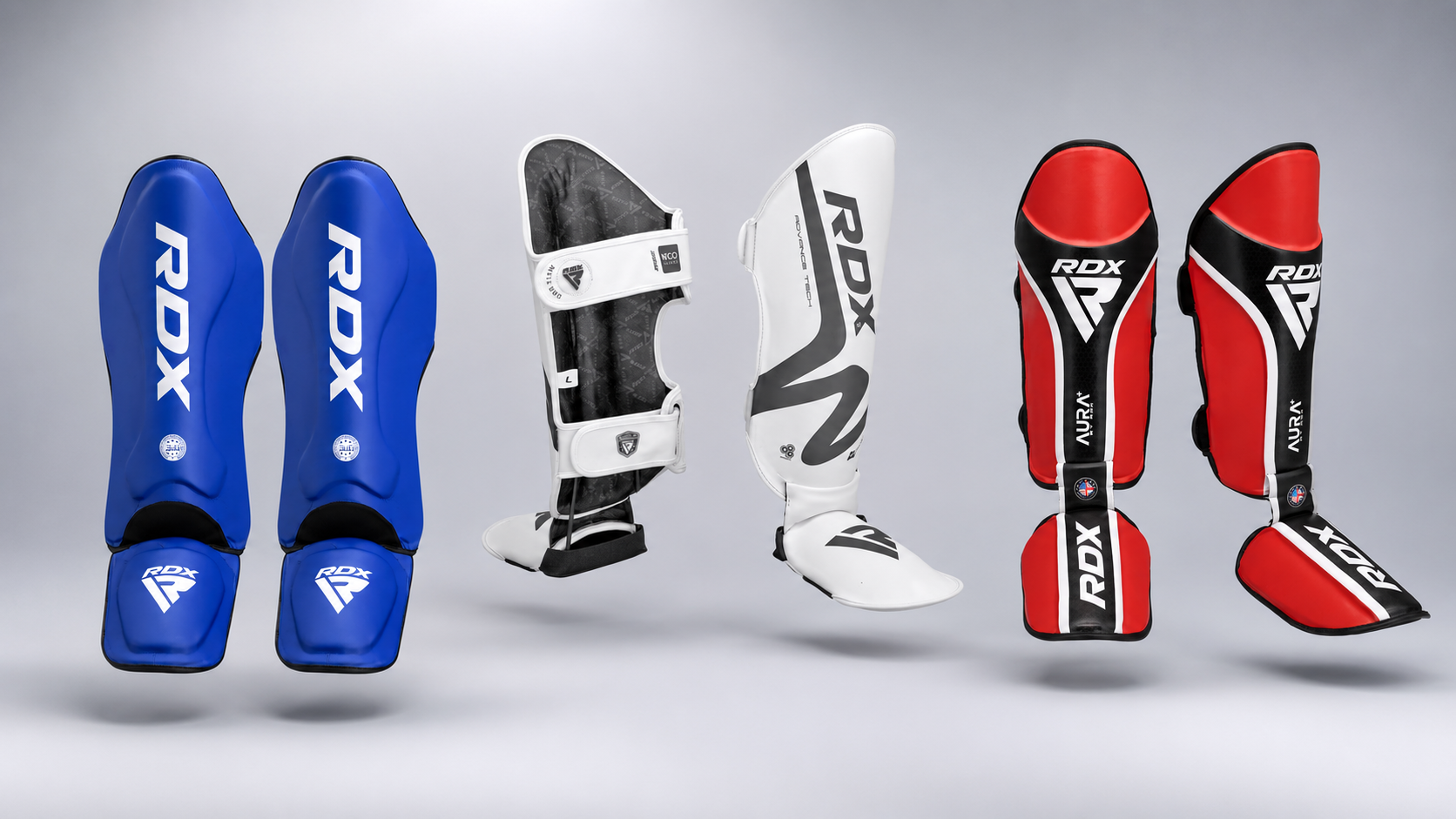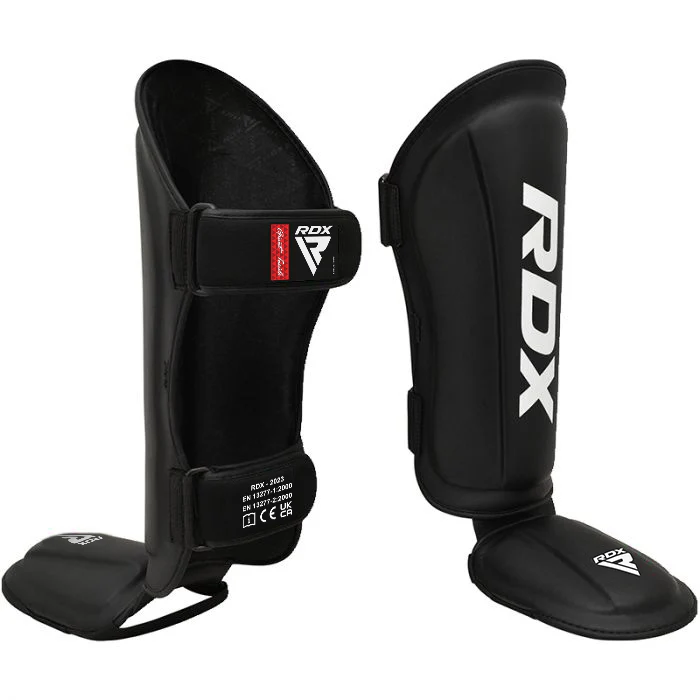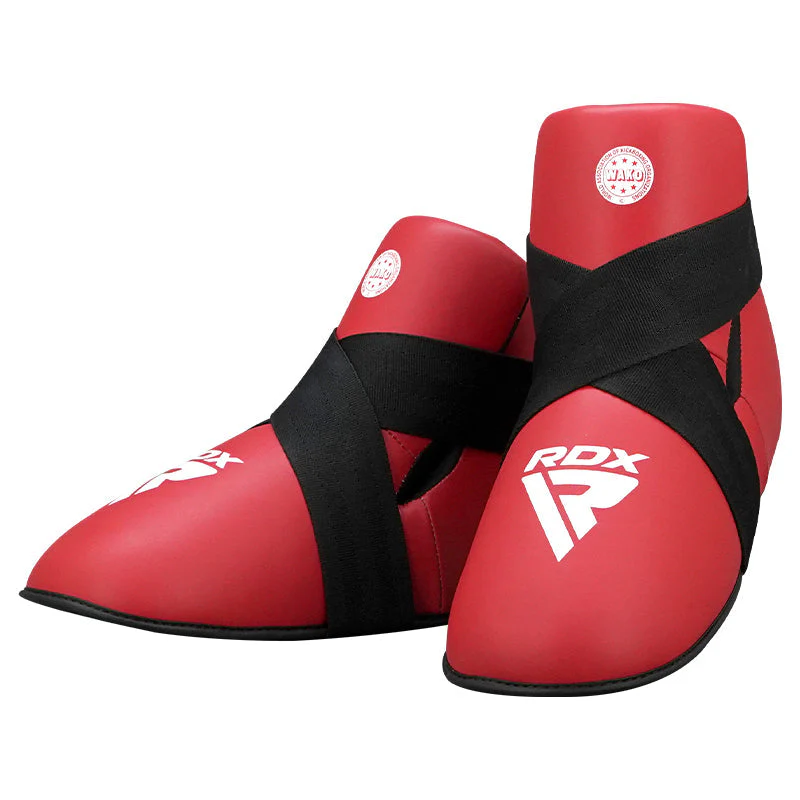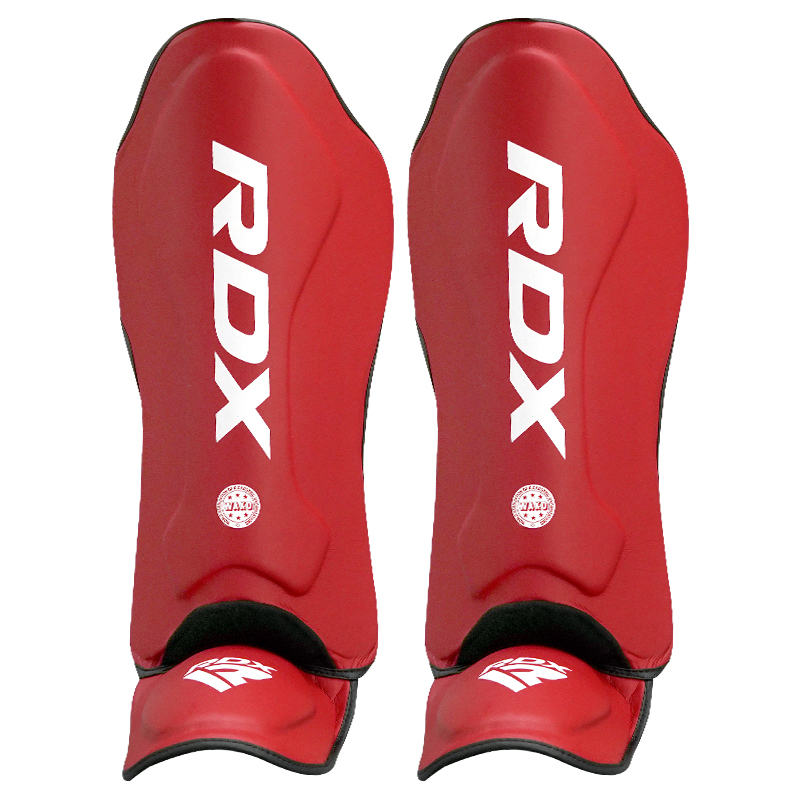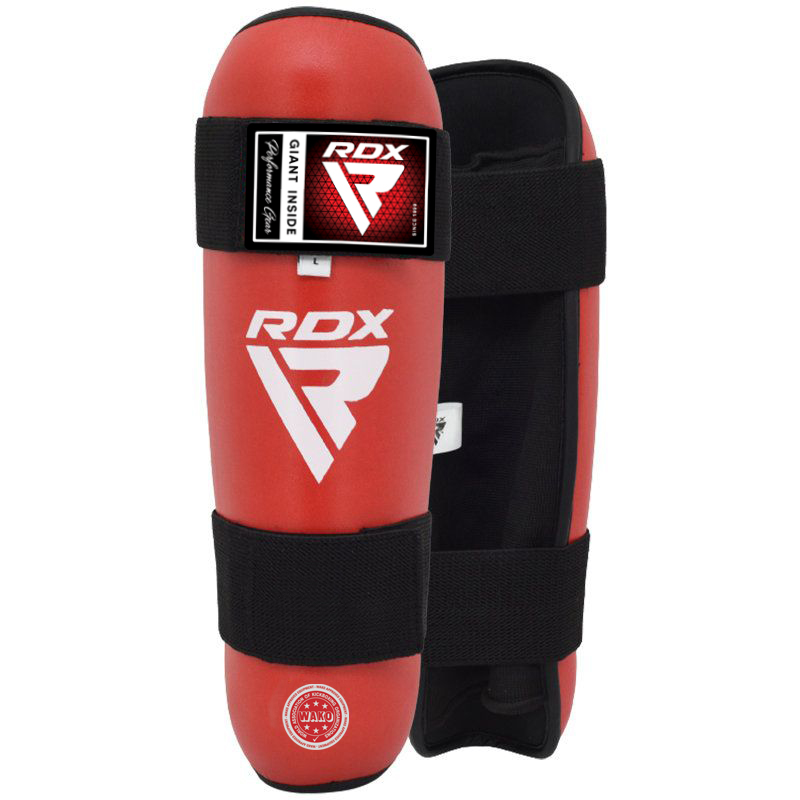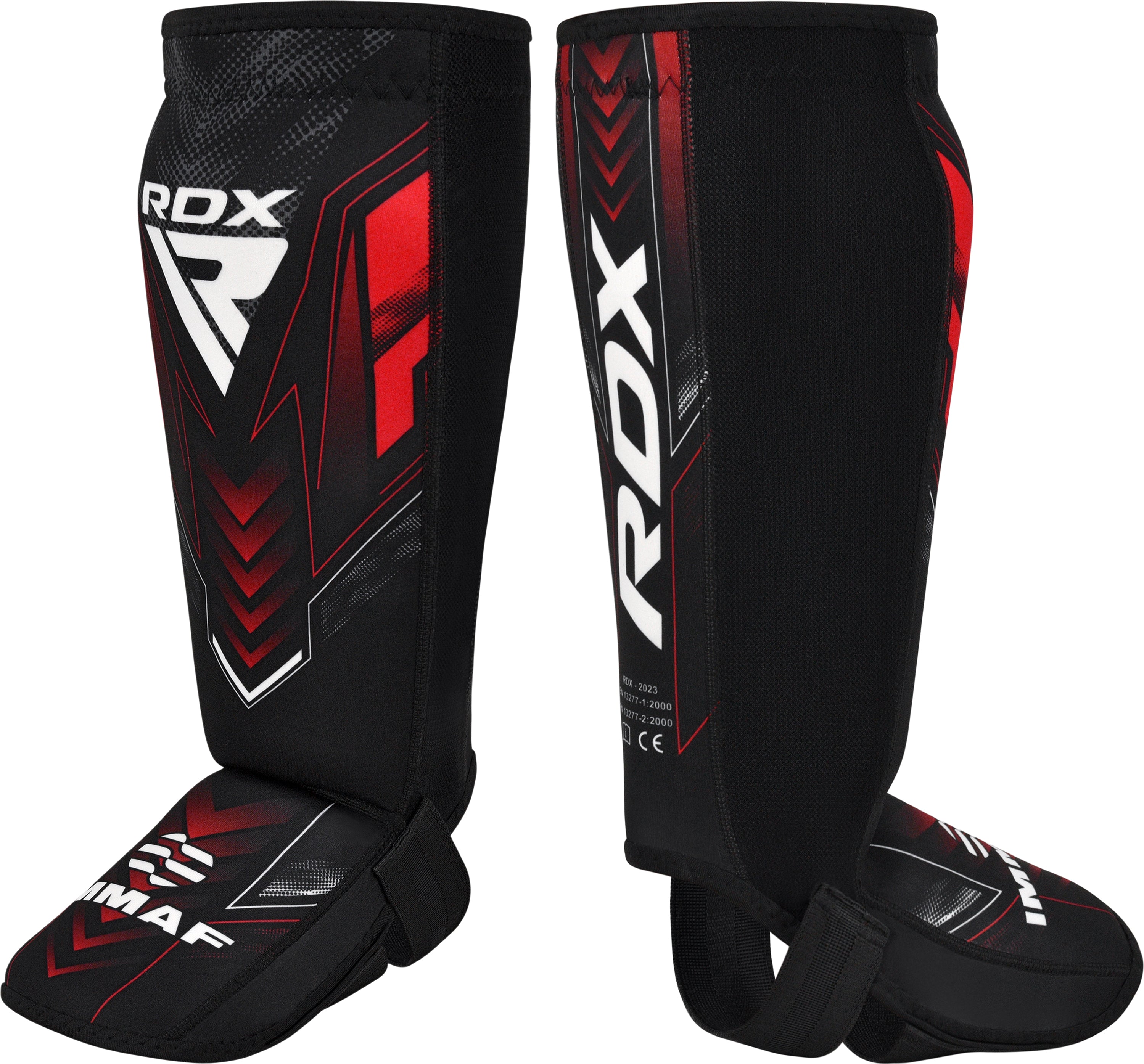
The shins and insteps are among the most vulnerable parts of the body in combat sports. Every kick or block transfers enormous force to these areas—and without protection, you risk painful bruises, pulled muscles, or even tibia fractures.
Whether you train in kickboxing, Muay Thai, MMA, or karate, the right leg guards will allow you to train to your full potential without fear of pain. Investing in high-quality leg guards pays off from your very first training session.
You'll find two basic types on the market: shin guards (which cover only the front of the shin) and shin and instep guards (combined protection for the entire lower leg). The vast majority of modern models protect both areas at once, and that’s exactly what you’ll find here.
Neoprene / Foam – lightweight, breathable, slip-on. Ideal for beginners and lighter sparring sessions. Easy to put on and take off, with an excellent fit. The downside is lower durability during hard contact.
Leather / Super-Skin – premium material offering enhanced protection. Suitable for advanced athletes and competitive use. Longer lifespan, better shock absorption, certified for official competitions.
Combined (ConVEX / Maya Hide leather) – the most durable option with a reinforced layer and anatomical shaping. For intense training and competition.
Determine whether you're looking for protective gear for light training with mitts, sparring sessions, or competition use. Certified models are required for kickboxing (WAKO) or MMA (IMMAF) competitions.
The harder the contact, the thicker the padding you need. A good rule of thumb is the thickness of the foam layer—for competition models, it’s usually 25 mm or more.
Slip-on models (without Velcro) are more comfortable and quicker to put on, but they don't adapt as well to non-standard foot shapes. Models with Velcro or polyester straps provide a more secure fit during dynamic movement.
If you plan to compete, make sure the protective gear is approved by the relevant organization (IMMAF for MMA, WAKO for kickboxing). Certified models bear the CE or UKCA mark.
How to choose the right size? Measure the circumference of your calf at its widest point and the length of your shin from your ankle to your knee.
| Size | Calf Circumference (Approximate) | Suitable for |
| XS | up to 30 cm | children, slim adults |
| S | 30–33 cm | women, lighter men |
| M | 33–36 cm | average build |
| L | 36–39 cm | fuller figure |
| XL | 39–42 cm | large build |
| 2XL–3XL | 42 cm and up | Extra-large build |
Tip: If you’re between two sizes, choose the larger one. A guard that’s too tight restricts movement and can cause uncomfortable pressure on the shin.
If you're just starting out or train only occasionally, you don't need the most expensive models. Look for solid, basic protection at a reasonable price.
We recommend:
RDX SIB HOSIERY SHIN INSTEP GUARD FOAM Shin and Instep Guards
RDX SIB shin guards certified to OEKO-TEX® Standard 100
For athletes who train several times a week, a combination of good protection, comfort, and durability is ideal.
We recommend:
RDX Neoprene Shin and Instep Guards, IMMAF-Approved
RDX KING T1 Shin and Instep Guards
IMMAF-Approved RDX Neoprene Shin Guards
Anyone who trains intensively or is preparing for a competition needs models with greater durability, better shock absorption, and, as a rule, competition certification.
We recommend:
Certified models are required for competition use. Check the rules of your organization—WAKO for kickboxing, IMMAF for amateur MMA.
We recommend:
Leg guards come into direct contact with sweat and therefore require regular maintenance. Neglecting their care leads to rapid material degradation and an unpleasant odor.
Basic rules:
✔ After every workout, take the shin guards out of your bag and let them air dry—never store them wet or crumpled in the bag. Direct sunlight and heat (tumble dryers, radiators) damage the material, so always dry them in the shade.
✔ Wipe the surface regularly with a damp cloth and a small amount of soap. For leather models, you can use a leather conditioner to maintain the material’s flexibility and extend its lifespan.
✔ Neoprene and foam models can be hand-washed occasionally in lukewarm water with a mild detergent. However, they should never be put in a washing machine or dryer.
✔ If an unpleasant odor develops on the inside, treating the bag regularly with an antibacterial spray for sports equipment or sprinkling it with baking soda overnight will help.
Do I need to wear protective gear when I'm just starting out?
Yes, starting from your very first contact training session. Even during light sparring, there’s a risk of unexpected strikes, and the shins are very prone to bruising. Neoprene models starting at 654 Kč will protect your legs without a major investment.
What’s the difference between MMA and kickboxing shin guards?
MMA shin guards (e.g., IMMAF-certified) are typically designed for greater mobility—they adapt to grappling and falls to the ground. Kickboxing shin guards (WAKO) place greater emphasis on absorbing direct kicks and tend to be stiffer.
Do I also need an instep guard for my shins?
If you practice a discipline that involves instep kicks (teep, roundhouse), then definitely yes. Combined shin and instep guards are standard today, and virtually all models in our lineup offer this combination.
Can the guards be worn over socks?
Slip-on neoprene models are usually worn directly on the foot or over a thin athletic sock. Leather competition shin guards are worn over a sock. A thicker sock can pull the shin guard down and compromise its fit.
How can I tell if a protector has reached the end of its useful life?
Check the foam core—if you press on it and it permanently dents (doesn’t return to its original shape), it has significantly lost its shock-absorbing ability. Cracks in the leather or torn fastenings are also signs that it’s time for a replacement.
Are competition-grade pads also suitable for training?
Yes, premium models such as the WAKO T1 or T17 Aura series are designed for intensive daily use. Their higher price pays off in longer durability and better protection.
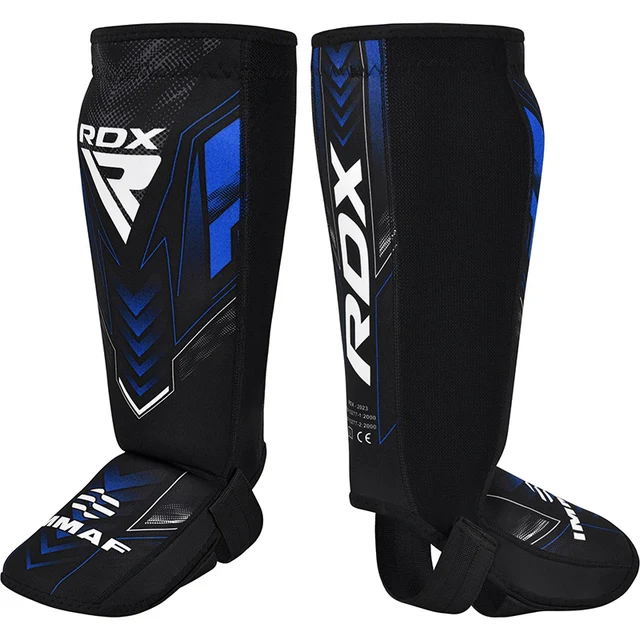
Improve your fighting skills with neoprene shin guards that are IMMAF-approved for their combination of style and safety (CE-marked).
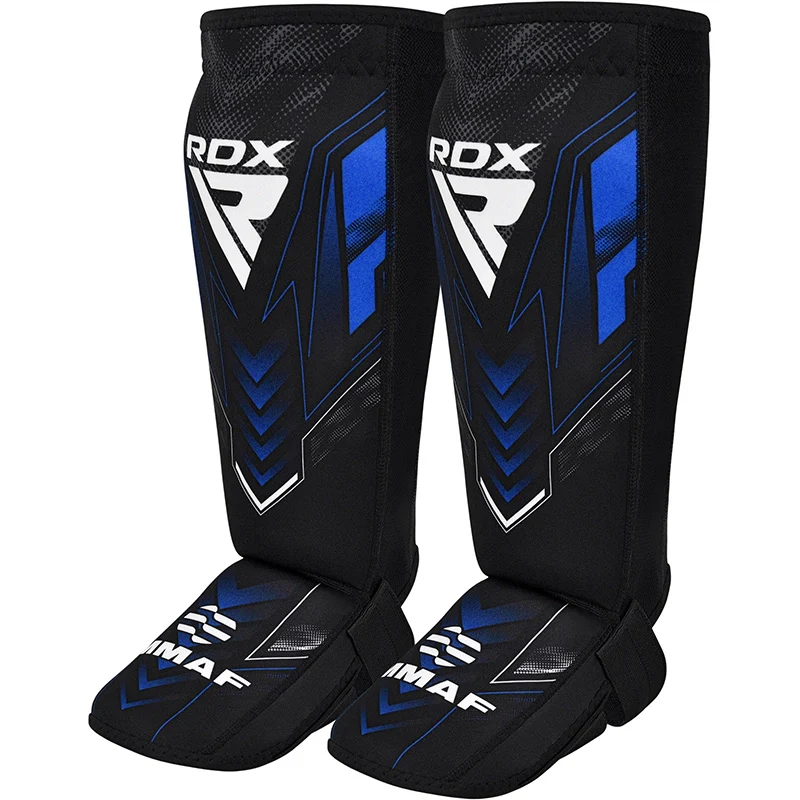
Improve your fighting skills with neoprene shin guards that are IMMAF-approved for their combination of style and safety (CE-marked).
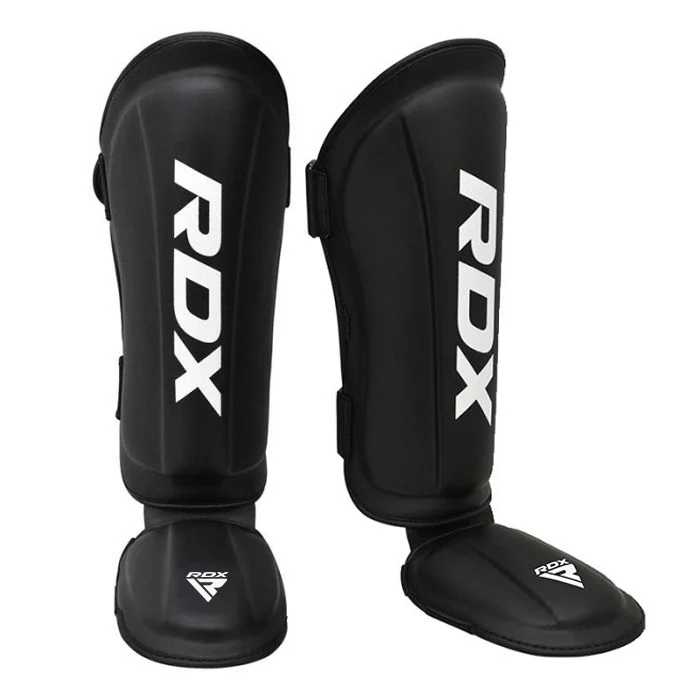
Unstoppable power in every strike. Are you ready to take your training to the next level? With the RDX KING T1 Shin and Instep Guards, you’ll get not only protection but also the confidence that will…
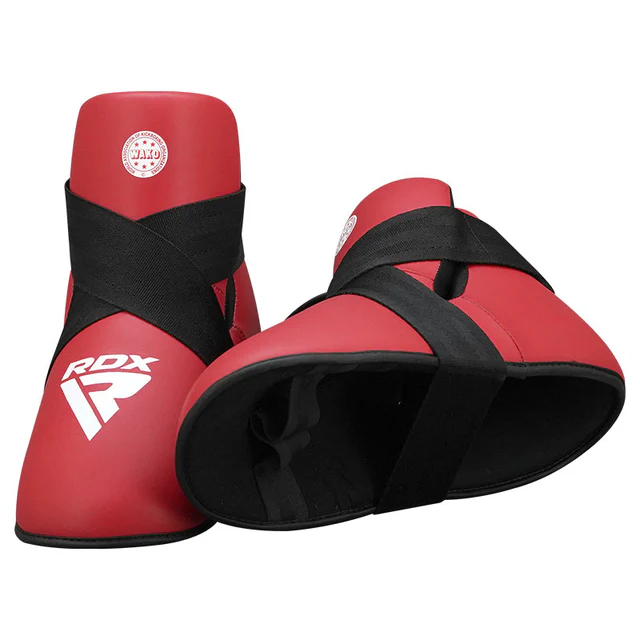
Approved by WAKO for competition use. These kickboxing sparring shoes are made of 100% genuine cowhide leather and feature 25 mm of foam padding for shock absorption.

WAKO-approved shin guards are made from patented Super-Skin leather, also known as technical or combat leather.
Approved by WAKO for competition use. These kickboxing sparring shoes are made of 100% genuine cowhide leather and feature 25mm foam padding for shock absorption.

WAKO shin guards are made of PU leather with a polyester strap for easy on and off.
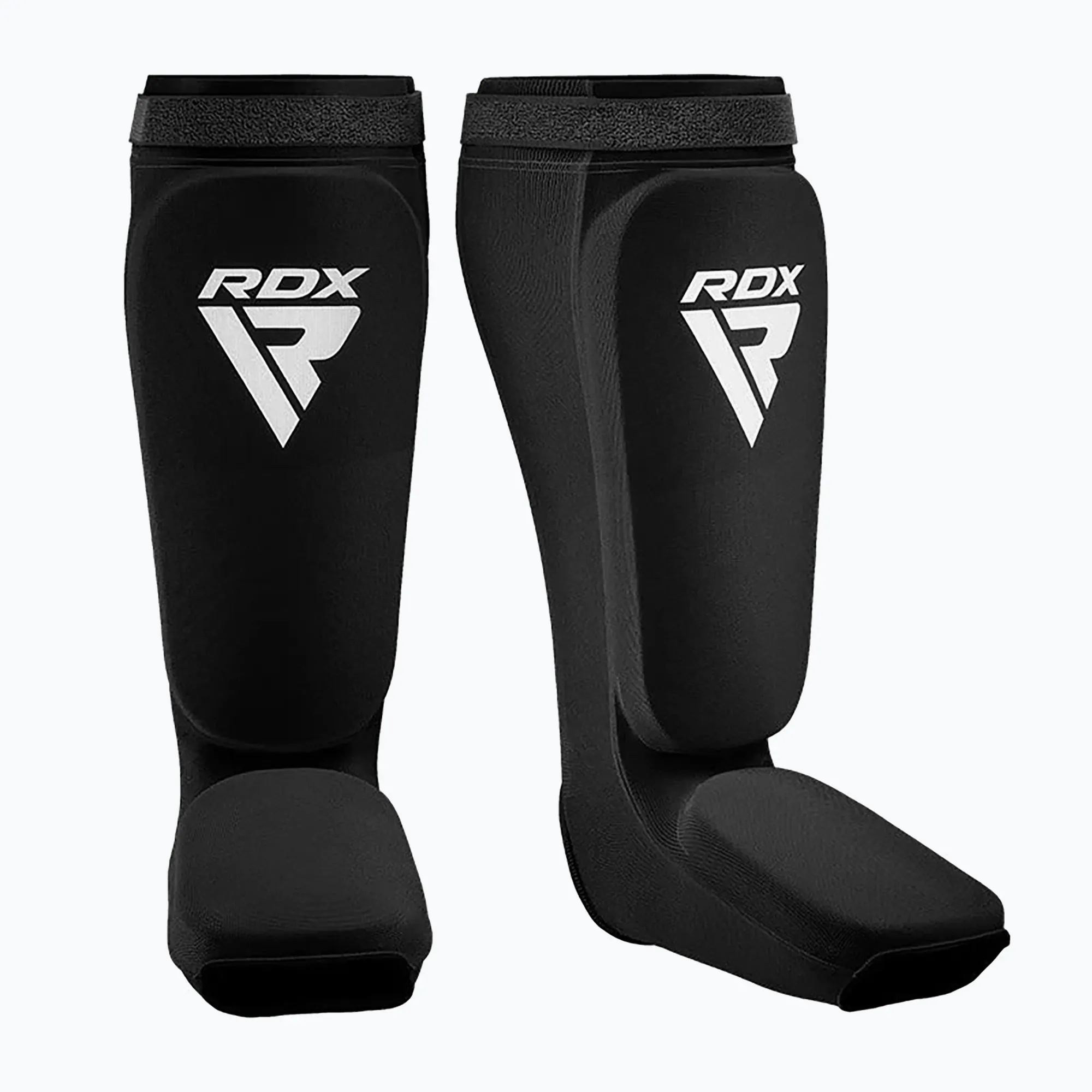
The RDX Hosiery Shin Instep Foam black/white shin and instep guards provide advanced protection during intense martial arts training. Equipped with modern technologies, they effectively combine shock absorption and breathability, ensuring comfort and safety even during prolonged use.
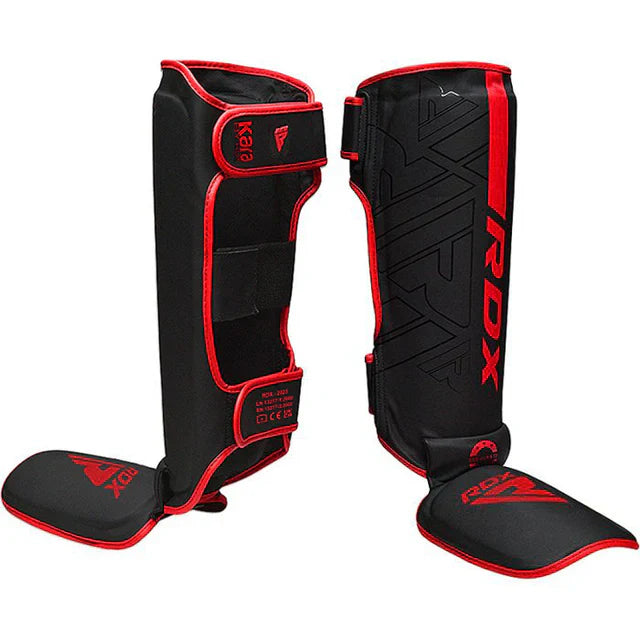
RDX presents the new Shin Instep Guard, a solution for all your protective needs. Made from Maya Hide Convex Skin leather, this shin guard offers better resistance to wear and tear, even after…

RDX neoprene shin guards, approved by the IMMAF, will take your fighting game to the next level thanks to their combination of style, durability, and certified safety (CE-marked).
Acra is a purely Czech brand that has been providing a full range of sports equipment for homes and rural playgrounds since 1991.
Customer Service Center
Feel free to write anytime
Call Mon–Fri, 6 a.m.–3 p.m.
Delivery Methods
Payment Methods