Tennis is a great sport for both fitness and fun—just choose the right racket, suitable balls, and adjust the stringing as needed.
In our Tennis category, you’ll find these three main groups: tennis rackets, tennis balls, and tennis strings.
What's important to you: comfort, an easy start, and "great value for the money."
Recommended rackets:
Balls for recreational play:
What's important to you: more consistent performance, a better "feel for the ball," and a more balanced racket.
Recommended balls:
Racket for “older children—beginners” (if you’re looking for a racket for school or a club):
Who it’s for: You play indoors, focus on technique, and want to feel confident in your shots and have more control over the ball.
What’s key: For precise play, the right combination of frame and stringing often makes the biggest difference. The ideal approach is to choose an unstrung racket and have it strung according to whether you want more control or comfort.
Pro rackets without strings (you’ll fine-tune the frame with your stringing):
For a “more precise” game, the stringing is often the quickest upgrade—it changes control, stiffness, comfort, and durability.
Tip:
I want more control → go for a stiffer/more durable string (and possibly higher tension).
I want more comfort → go for a softer/more flexible string (and lower tension).
✔ Close the can of balls immediately after playing. Pressurized balls gradually lose their “bounce” once the can is opened, so don’t leave them open any longer than necessary.
✔ Keep your grip loose most of the time; only tighten it at the moment of contact. When you grip the racket too tightly, your forearm and wrist stiffen, making it harder to make quick, precise adjustments.
✔ If the balls are bouncing off your racket more and you’re hitting over the net more often, it’s often not a matter of technique but of loose strings. Strings lose tension and responsiveness over time, which can reduce control.
✔ A simple rule for string tension (control vs. power):
✔ Replace your grip or overgrip before it starts to slip. Once it loses its “stickiness,” you’ll be forced to grip the racket tighter, which reduces both accuracy and comfort.
✔ Training tip: For frequent rallying and practice (even with a ball machine or feeding), it makes sense to consider balls with a longer lifespan—typically, “pressureless” balls last longer than pressurized ones.
✔ How do I know when I need a new string job?
If you feel like the ball is “bouncing off” the racket unpredictably, going out of bounds more often, or if the shot feels harder on your arm—the strings may have lost tension or responsiveness.
✔ How often should I restring my racket?
A practical rule of thumb: restring it about as many times a year as you play per week; if you play more often, feel free to do it more frequently (1 time per week → about 1 time per year, 2 times per week → about 2 times per year…).
✔ What difference does higher vs. lower string tension make?
Generally speaking: higher tension adds control, while lower tension adds power and comfort (a greater “trampoline” effect).
✔ What’s the difference between pressurized and pressureless balls?
Pressurized balls bounce well right after opening and keep up with the pace of the game, but they gradually lose pressure. Pressureless balls usually last longer and are often used for practice as well.
✔ When should I replace the overgrip?
As soon as it starts to slip, loses grip, develops cracks, or you feel like you have to grip the racket too tightly.
✔ Why has my control gotten worse even though I’m playing the same way?
The most common culprits are a worn-out string bed (the tension drops) or old balls—both change the ball’s behavior more than you’d expect.

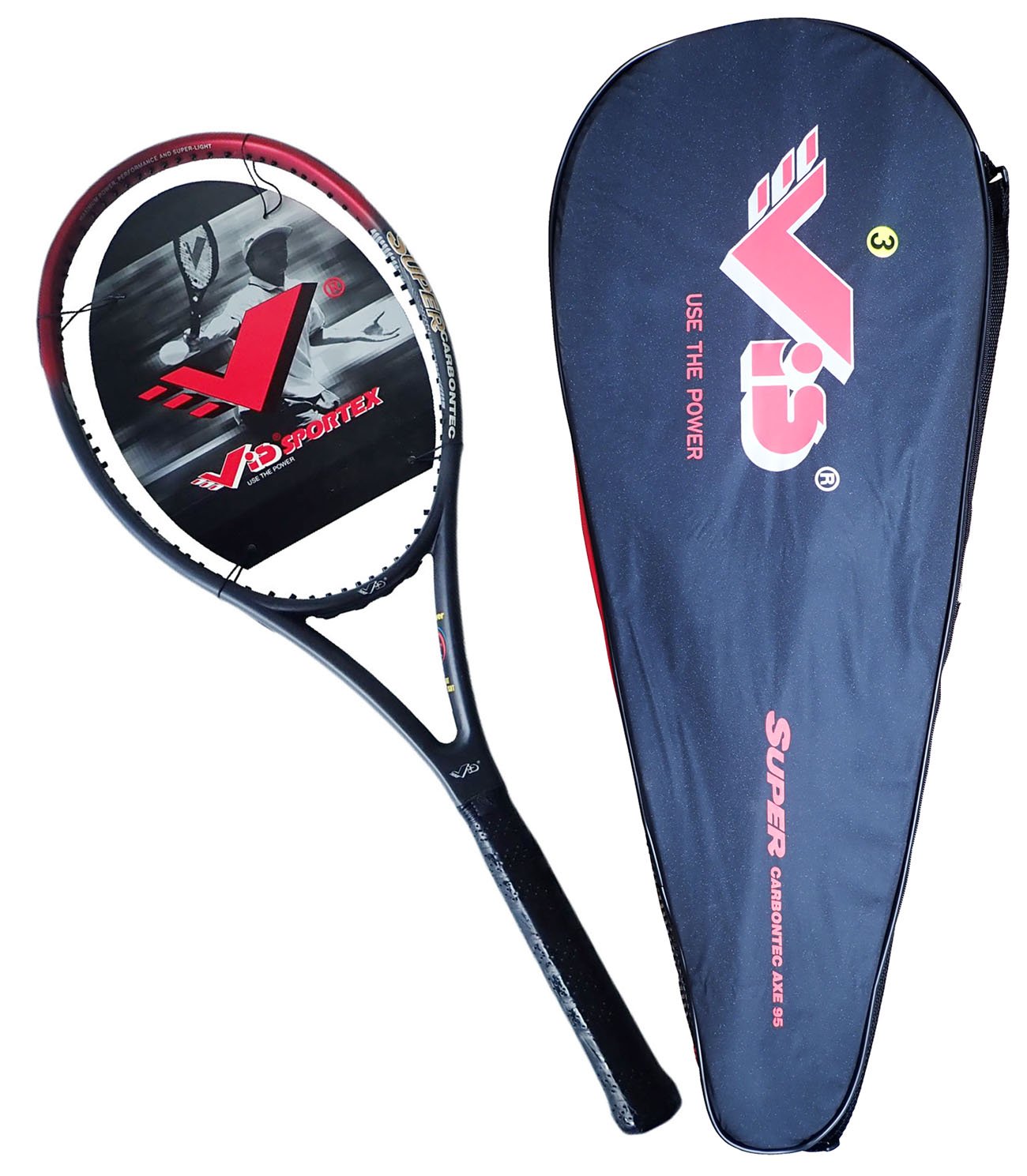
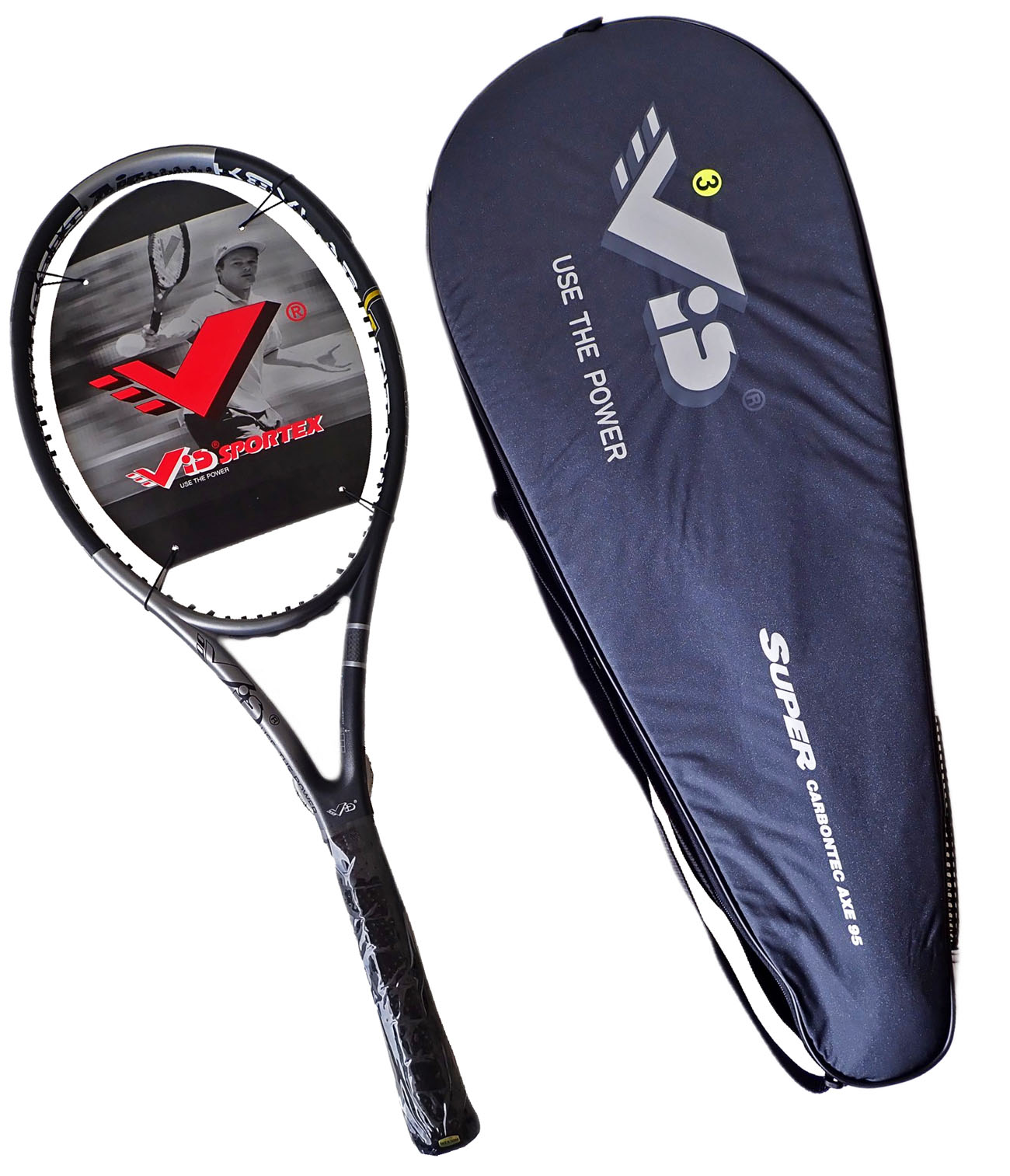
VIS CARBONTECH AXE 95 tennis racket (unstrung), modeled after earlier Wilson frames.

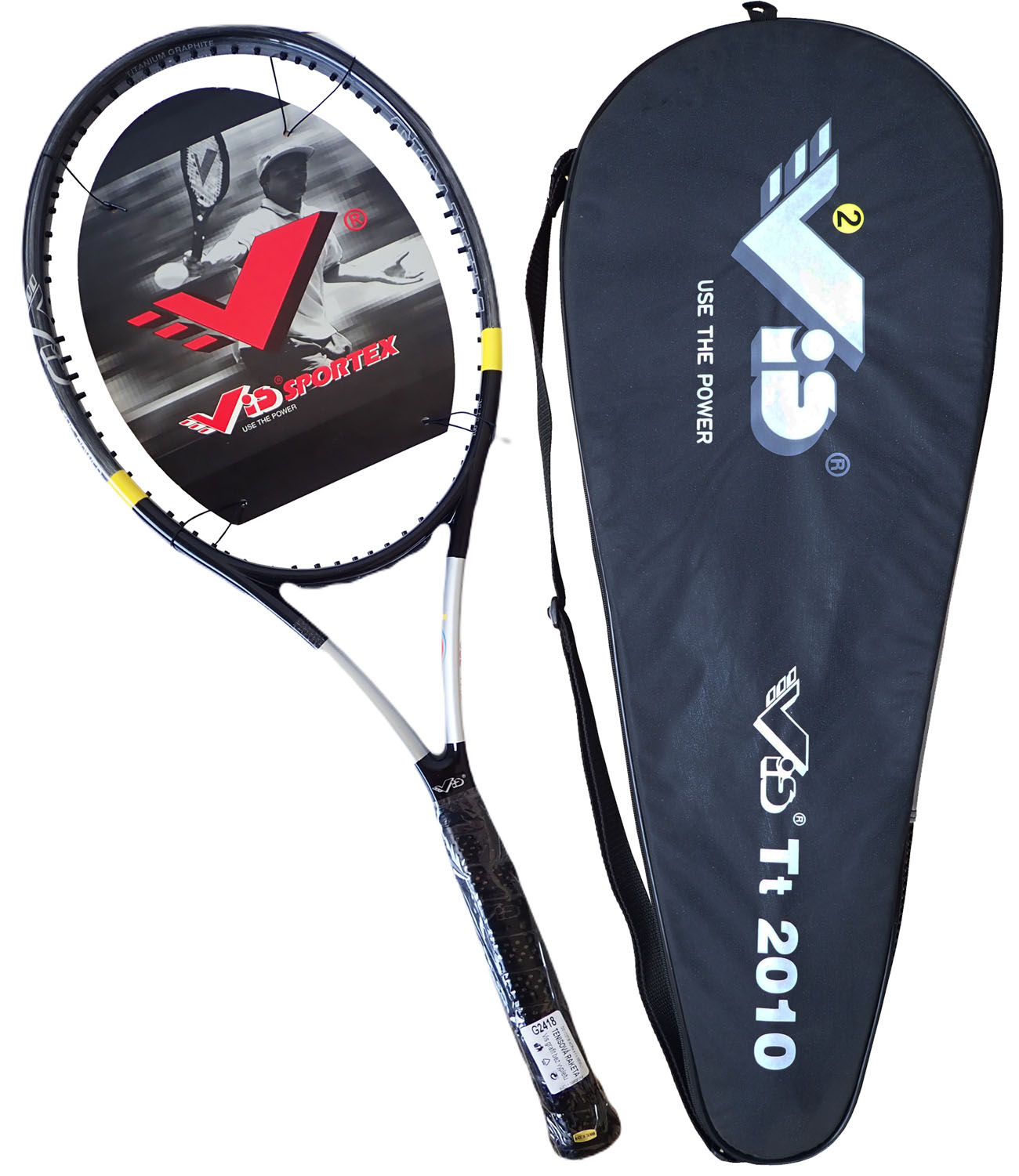
Vis Tt 2010 tennis racket. A high-quality racket with an aluminum and titanium frame.
VIS CARBONTECH AXE95 tennis racket (unstrung), manufactured based on Wilson frames.

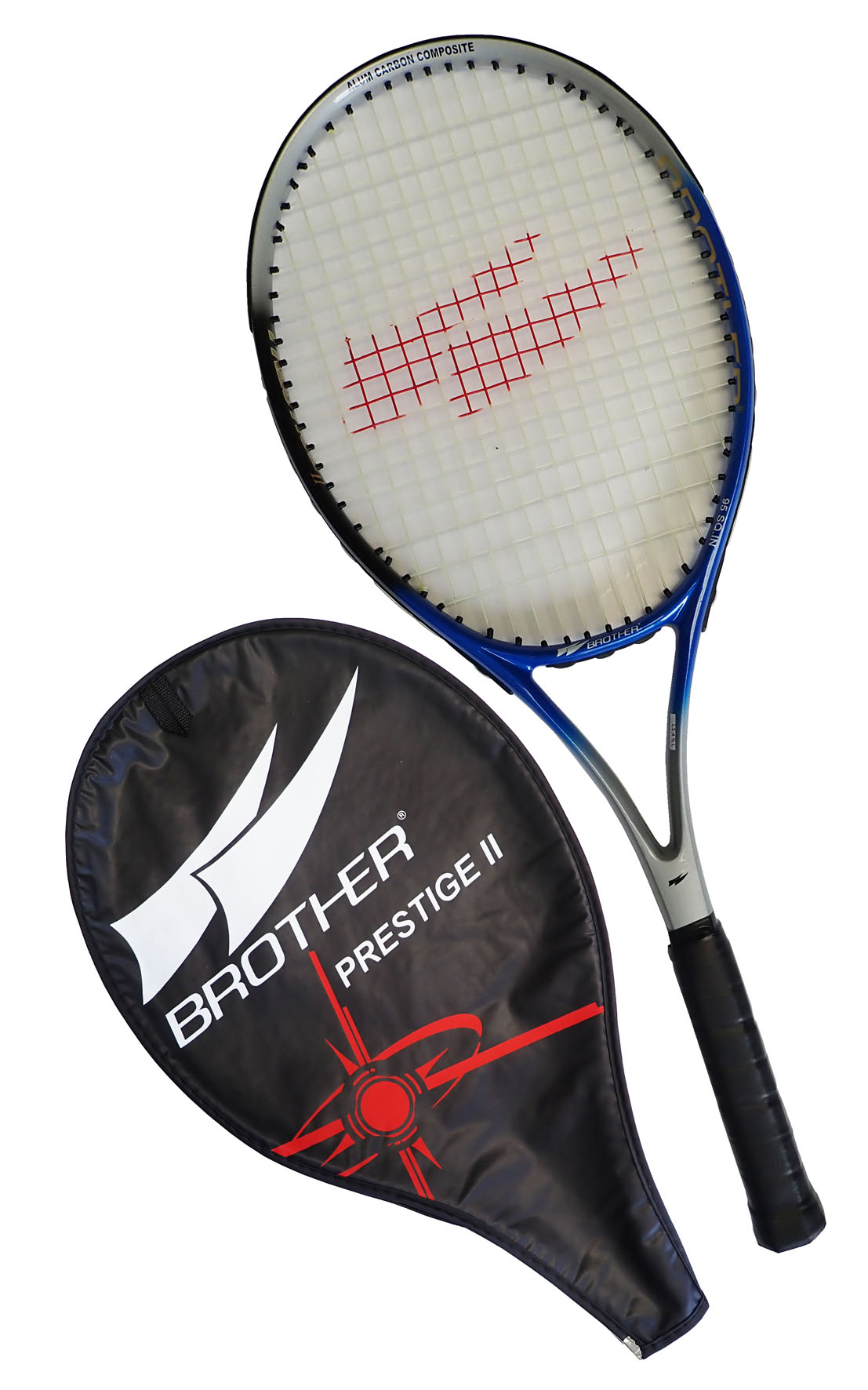
BROTHER PRESTIGE II composite (Al+graphite) tennis racket, with a case. Recommended for beginners.

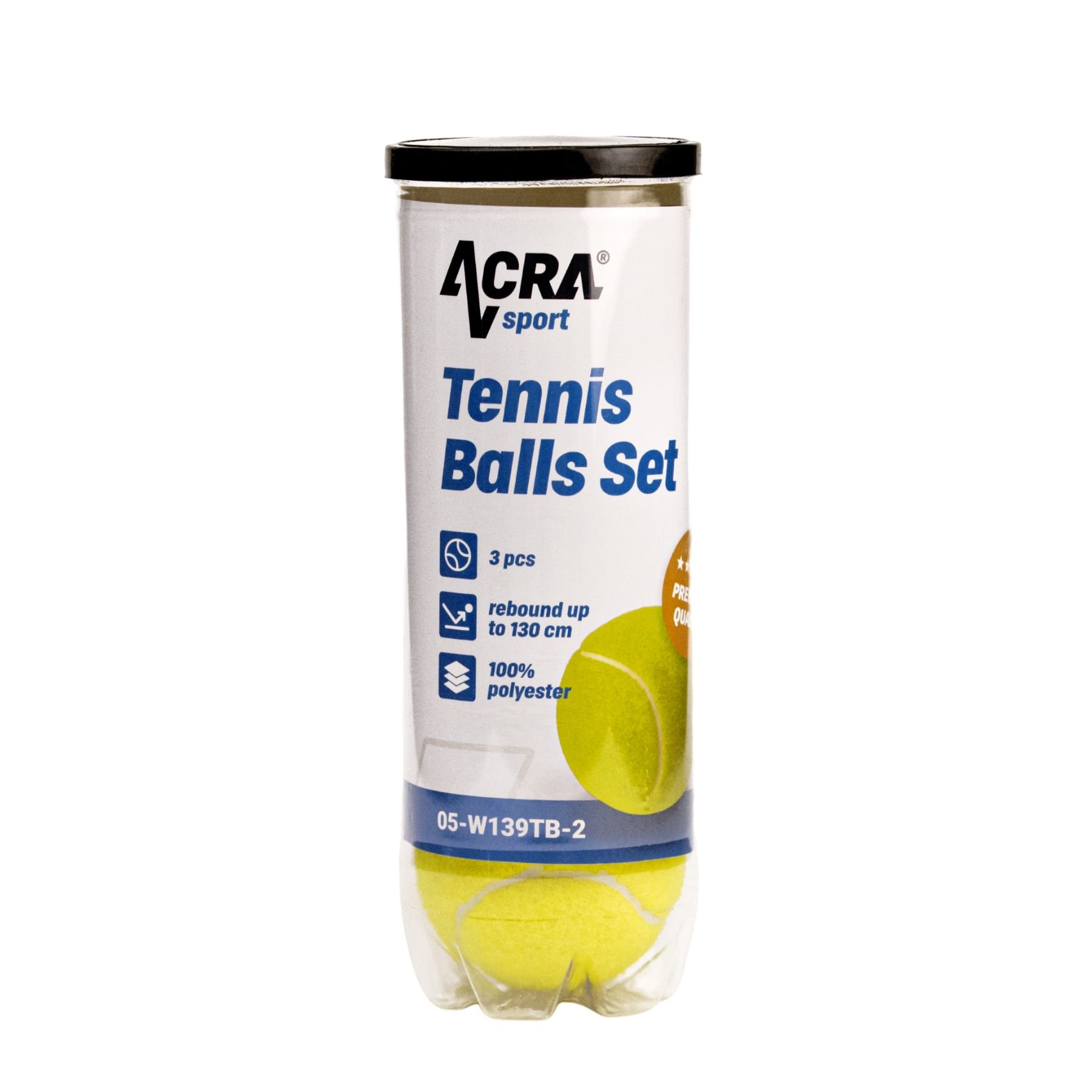
Acra Tennis Balls – Recreational (3 balls per can) These tennis balls are ideal for recreational play, fun with kids, or as all-purpose balls for your pets.

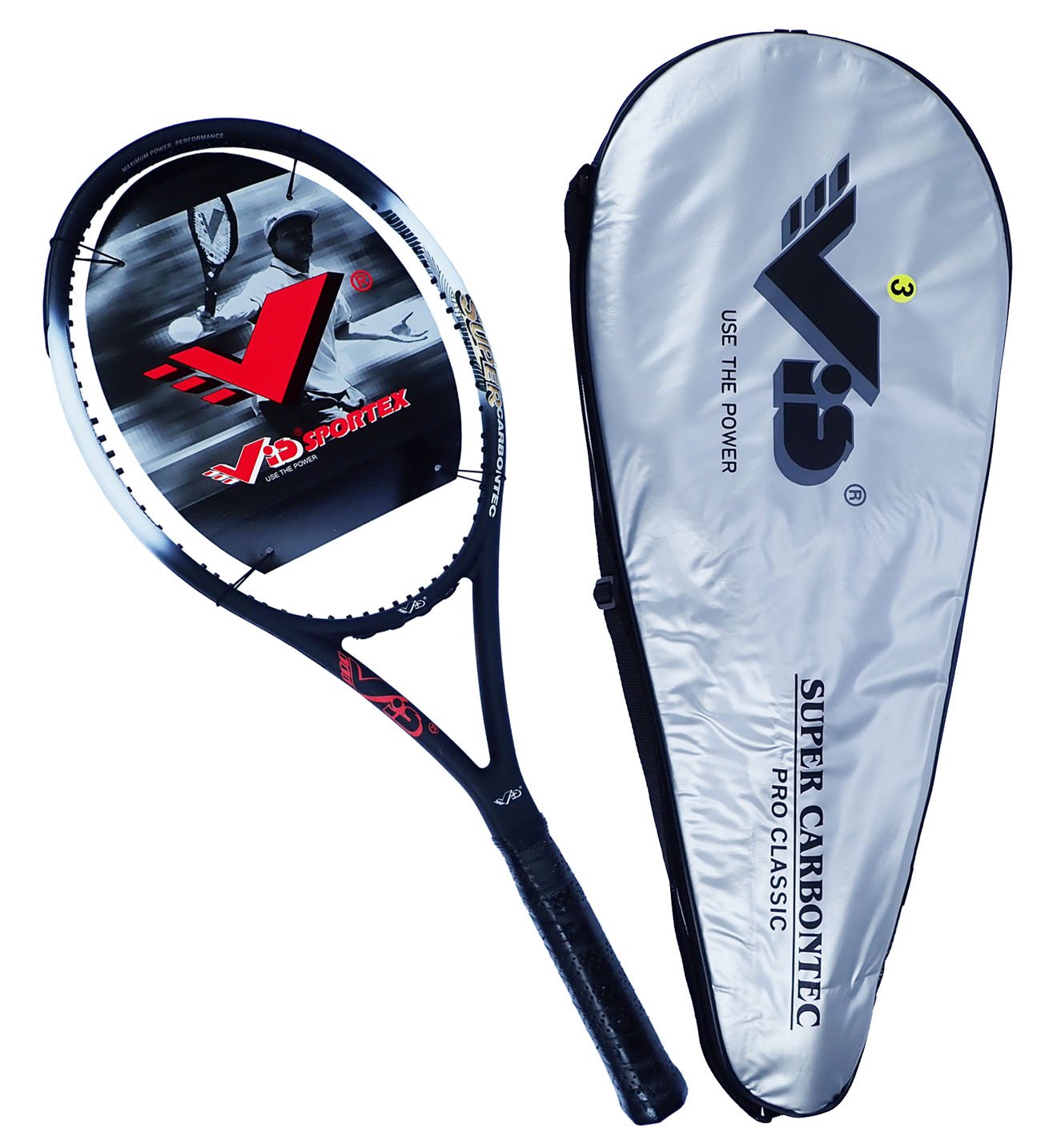
VIS CARBONTECH PRO CLASSIC tennis racket, unstrung, manufactured based on Wilson frames.
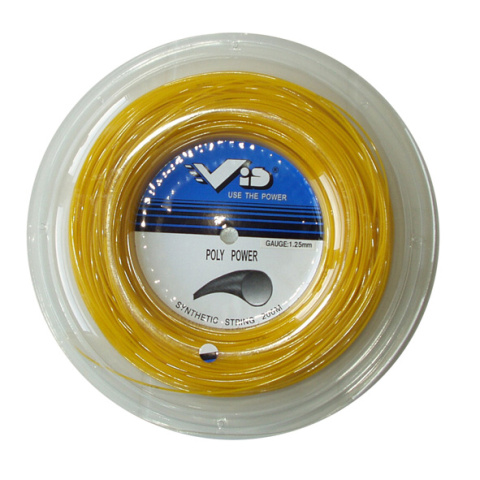
Polypower tennis string, 1.25 mm, 200 m roll. Based on its characteristics, this is a stiff string—often referred to as “wire.” The string feels stiffer even when the ball rebounds off the racket during play.
Vis Tt 2010 tennis racket. A high-quality racket with an aluminum and titanium frame.

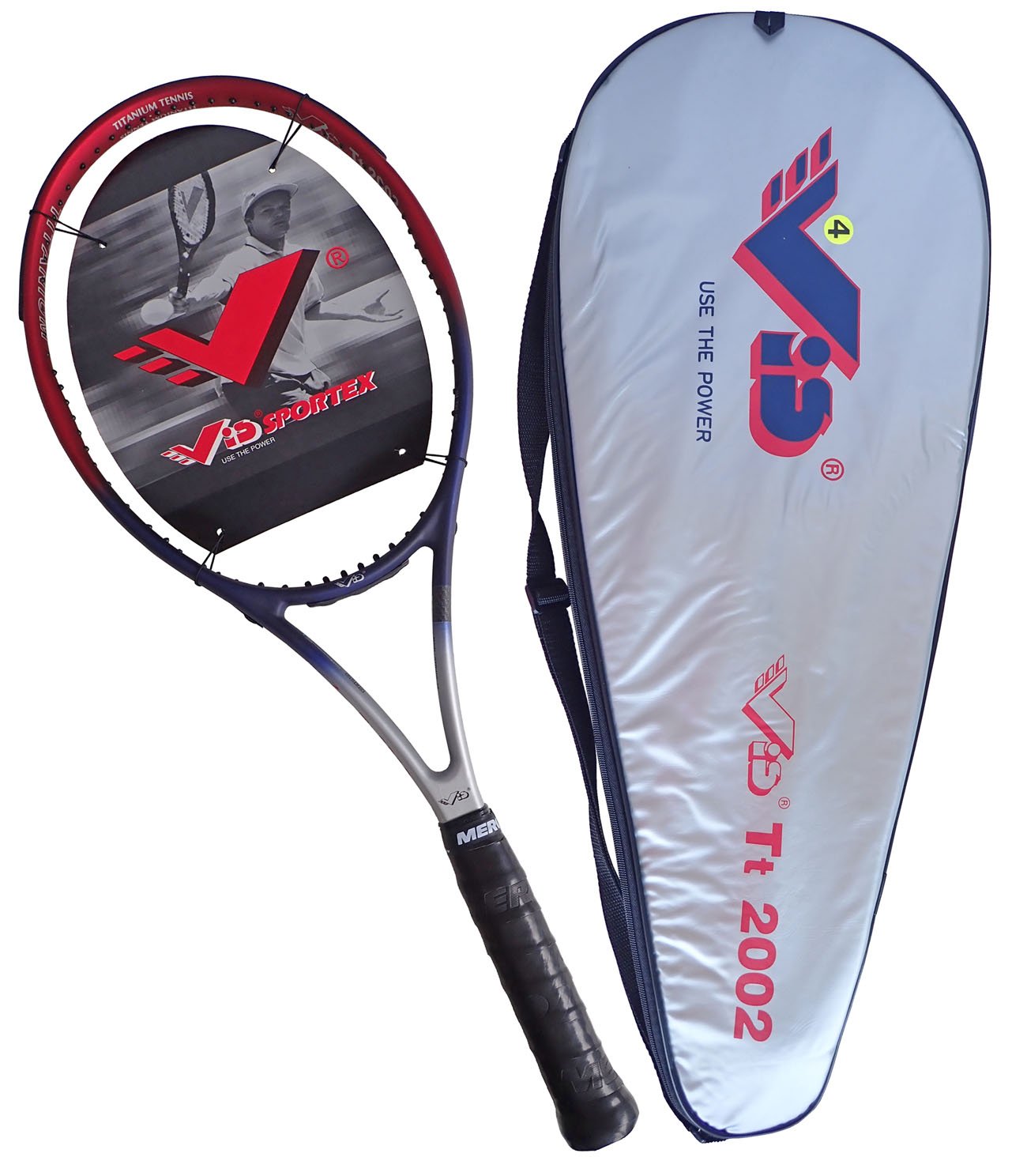
VIS T2002 tennis rackets feature frames modeled after Head frames and made from a graphite-titanium composite to enhance stiffness while keeping the frames lightweight.
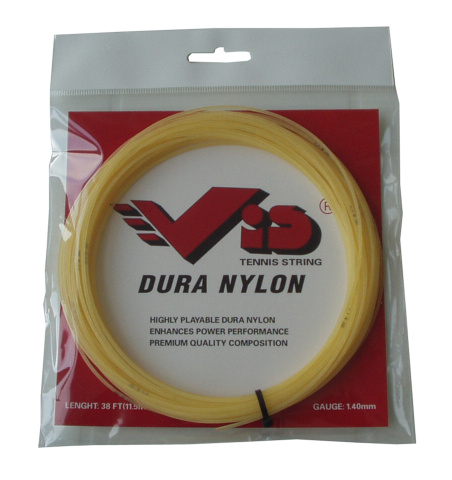
Duranylon tennis string, 1.35 mm, 11 m long. A durable string that lasts longer in a racket than standard strings. The length of the string is suitable for all racket head sizes up to 115 sq.
Acra is a purely Czech brand that has been providing a full range of sports equipment for homes and rural playgrounds since 1991.
Customer Service Center
Feel free to write anytime
Call Mon–Fri, 6 a.m.–3 p.m.
Delivery Methods
Payment Methods