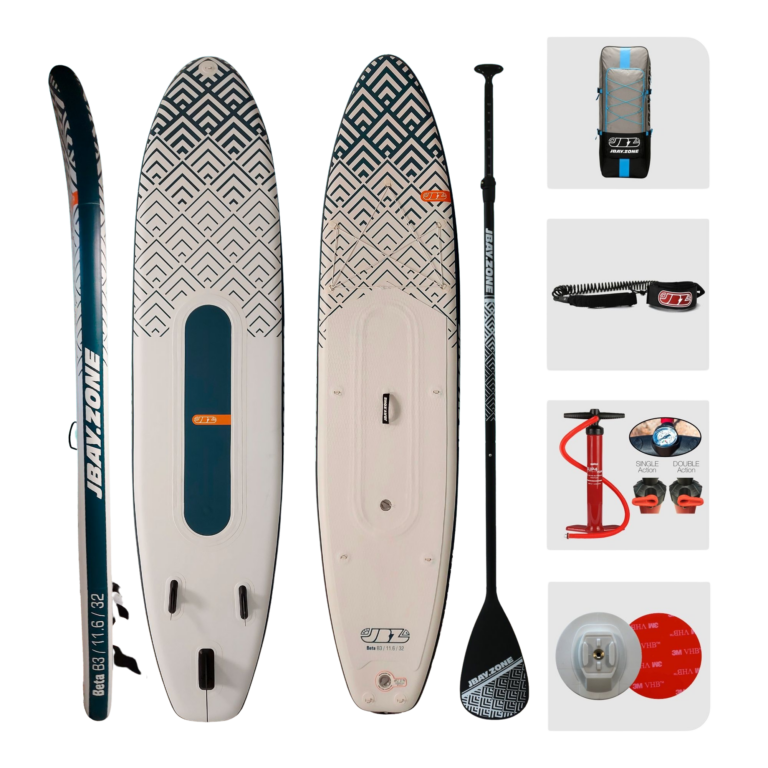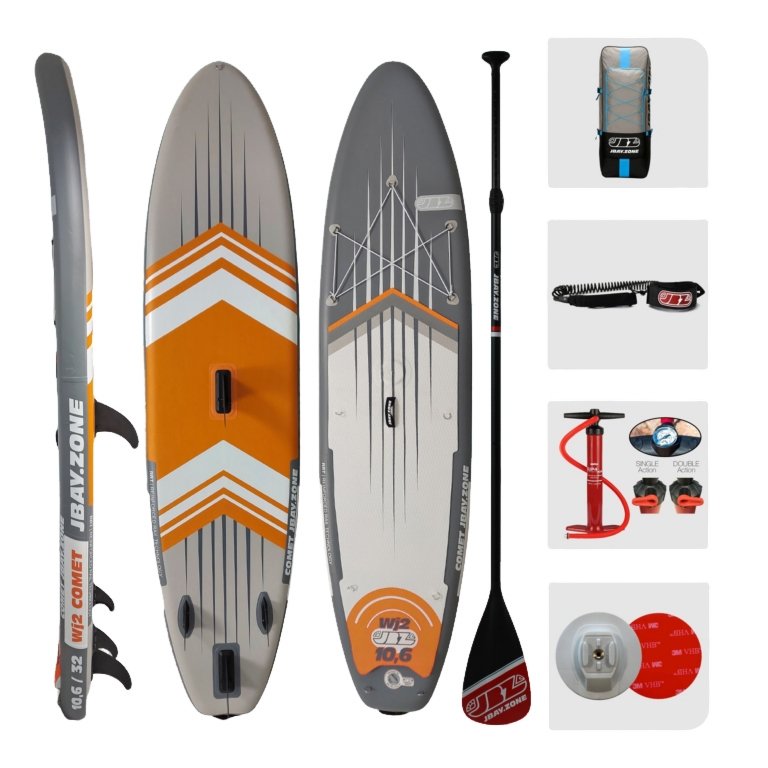
A paddleboard is a great choice for leisurely outings, active relaxation, and getting started with water sports.
Our selection in this category is based primarily on JBAY.ZONE inflatable paddleboards, especially versatile all-around models, complemented by specialty options like WindSUP and practical accessories. For most recreational paddlers, the inflatable option is very practical, mainly thanks to its ease of transport, portability, and simple storage.
If you’re looking for your first paddleboard for calm waters, family outings, and leisurely trips, a versatile all-around model is usually the best choice. Generally speaking, a wider board offers more stability, while a longer board provides a smoother glide and better performance on longer trips. For beginners, paddleboards approximately 305 to 366 cm long and around 76 to 86 cm wide are usually a good fit.
At ACRA, all-around paddleboards are currently the most common, which is good news for everyday recreational use. They’re versatile, stable, and suitable for a variety of conditions. However, if you want to paddle faster and farther, it’s worth looking into longer models. And if you’re interested in combining paddleboarding and windsurfing, there’s also a specialized WindSUP available.
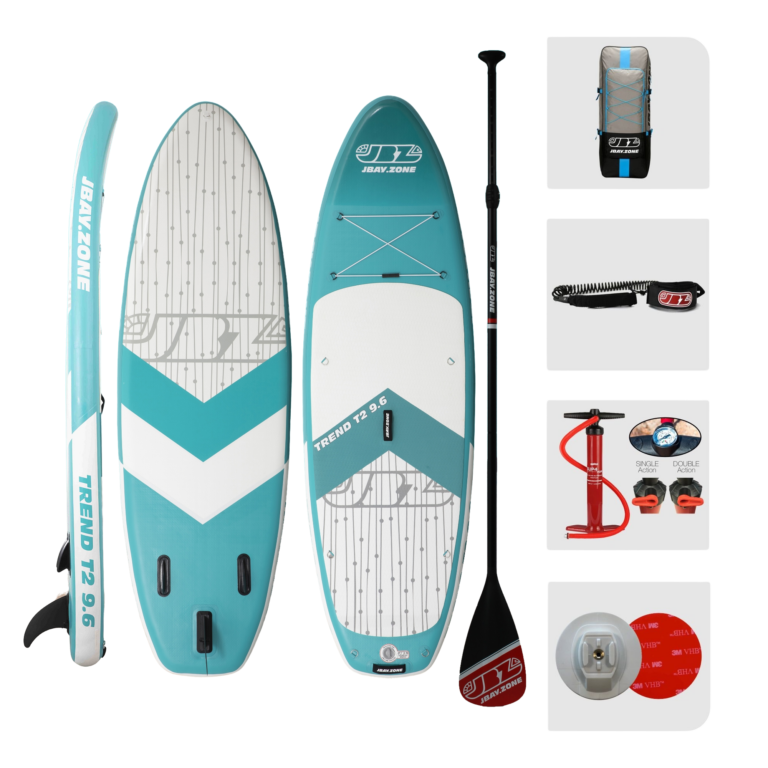
If you want the most stable start possible, check out the Jbay Zone T2 Trend 290×89×15
With a width of 89 cm, it’s very stable; ACRA describes it as the ideal model for beginners and family use. The package includes the paddleboard, leash, paddle, bag, pump, and repair kit.
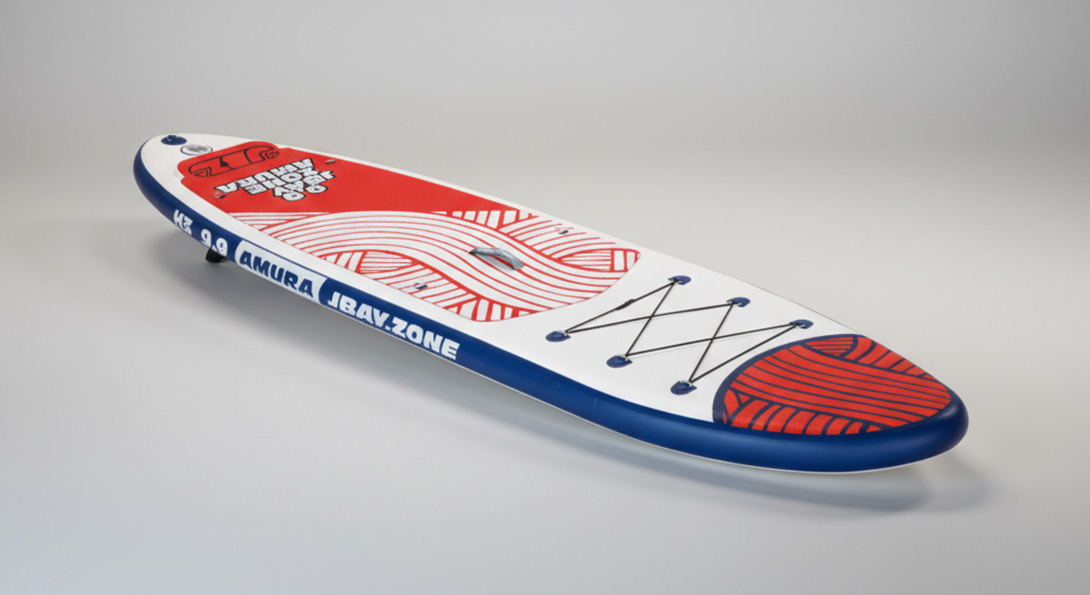
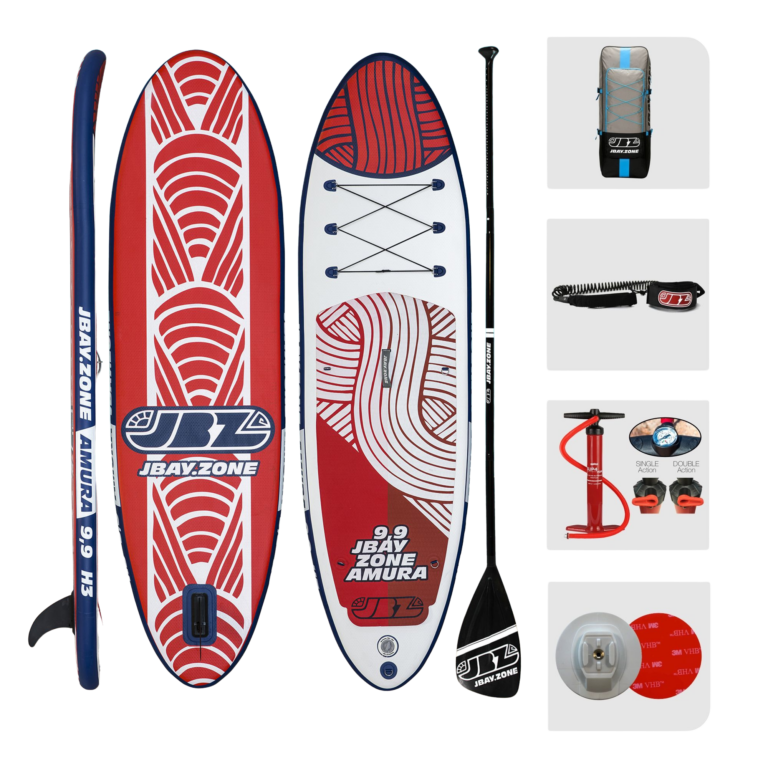
If you’re a lighter rider or looking for a lighter setup, the Jbay Zone H3 Kame 297×81×10 is an interesting option.
It’s designed for riders weighing up to 99 kg, weighs just 7.2 kg, and still offers a comfortable width of 81 cm for easy learning.
If you want longer trips, more space, and a higher weight capacity, the Jbay Zone D3 Delta 350×81×15 is a great fit
It’s 350 cm long, has a volume of 338 l, and a weight capacity of up to 160 kg, making it suitable for larger riders and more relaxed family outings.
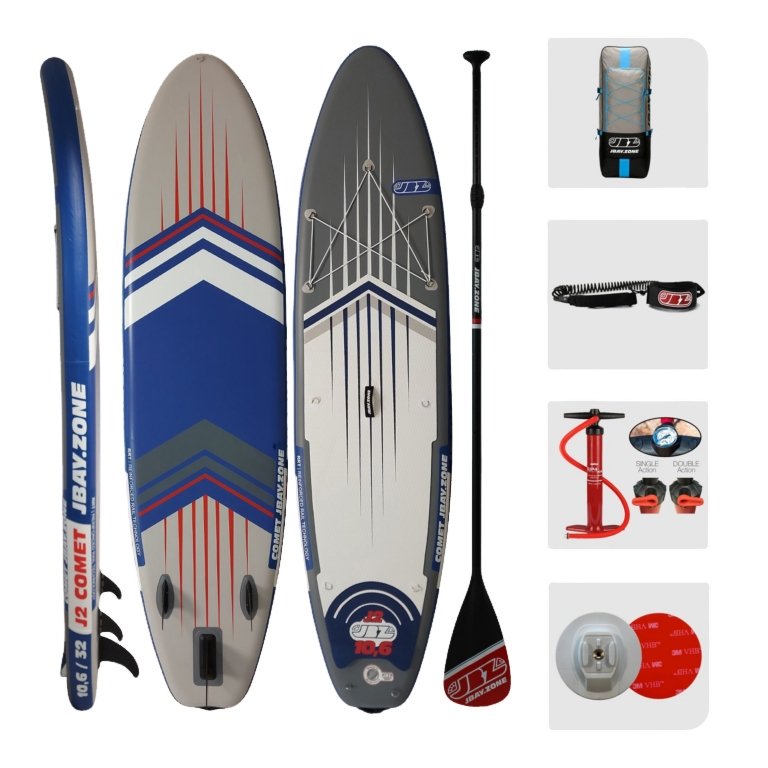
If you want a paddleboard for wind conditions too, check out the Jbay Zone WJ2 Comet 320×81×15 WindSUP
It features an M8 thread for attaching a mast, and the manufacturer recommends sails up to 3 m², combining classic paddling with the option of light windsurfing.
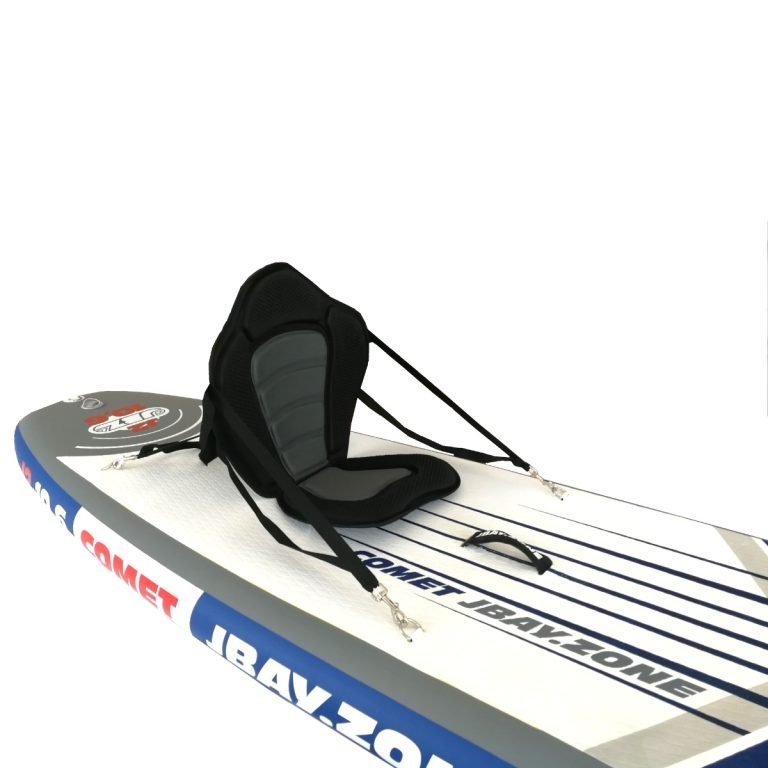
If you’d like to paddle in a seated position occasionally: a practical accessory is the Jbay Zone paddleboard seat, which attaches to the D-rings on the deck using straps and carabiners and increases comfort during calmer paddling.
If you care about appearance and don’t want a plain design: the lineup also includes the FRA and Eddie Colla design editions, which feature universal dimensions of 320 × 81 × 15 cm and a weight capacity of around 145 kg, but are primarily appealing for their striking graphics.
For most customers, an all-around paddleboard is the best choice. It’s stable, versatile, and suitable for calm waters, recreational paddling, and first-time attempts. Touring paddleboards tend to be longer, faster, and more efficient over longer distances, but they also require better balance. ACRA’s current lineup is dominated by all-around models, which are ideal for everyday use.
Both the length and width of a paddleboard have a major impact on how it handles on the water. Shorter paddleboards are easier to turn and feel more playful, while longer ones glide better across the water and are better suited for longer trips. For most adults, a length of approximately 305 to 366 cm is often recommended as a versatile range.
Width, on the other hand, significantly affects stability. Beginners usually find paddleboards that are roughly 76 to 86 cm wide to be suitable. In practice, this means that the extra-wide T2 Trend, at 89 cm wide, will feel very stable, while narrower models like the H1 or H2 may offer a more agile riding experience but with less initial stability.
Don’t base your choice of load capacity solely on your own weight. Always factor in extra weight for clothing, a backpack, a child, or even a dog. A higher load capacity usually means greater stability, which is an advantage when you’re just starting out. ACRA’s lineup includes models ranging from approximately 99 kg to 160 kg.
With inflatable paddleboards, it’s important to maintain the correct PSI. Generally, the pressure ranges from 15 to 20 PSI, but the recommendations for a specific model always take precedence. The T2 Trend and WJ2 Comet are recommended at 18 PSI, the H3 Kame at 15 PSI, and the D3 Delta at 18–20 PSI. A properly inflated board is stiffer, holds its course better, and feels more stable; an underinflated board flexes more and makes it harder to maintain your balance.
When buying a paddleboard, it’s worth checking whether you’re purchasing just the board itself or a complete set. Several ACRA models come with a paddle, pump, carry bag, leash, and repair kit included, so you can hit the water almost right away. A seat for a more comfortable riding position is sold separately.
✔ Don’t rush on your first ride. Feel free to start by paddling a few strokes on your knees in the middle of the board, and stand up only when you feel more confident. For beginners, this is often a more comfortable and stable approach than trying to stand right from the start.
✔ For your first attempts, choose calm water—ideally a sheltered cove or another safe spot without big waves. Stand as close to the center of the board as possible, with your feet about hip-width apart, your knees slightly bent, and your core engaged. Always check the weather, wind conditions, and the condition of your equipment before heading out.
✔ On lakes, canals, or in calm coastal coves, an ankle or calf leash (see explanations below) is commonly used, ideally a coiled one. On flowing water and rivers, a waist-length quick-release leash is safer; however, please note that in some cases, using a leash at all is not recommended in whitewater.
✔ With inflatable paddleboards, also keep the temperature in mind. A fully inflated paddleboard should not be left in direct sunlight for long periods. In hot weather, it’s a good idea to slightly release some air and check the pressure again before paddling.
What’s the best paddleboard for a beginner?
In most cases, a versatile all-around model that’s wide and stable enough. In ACRA’s lineup, the T2 Trend, for example, fits this description well, or the H3 Kame for lighter riders.
Is a shorter or longer paddleboard better?
It depends on what you expect from it. Shorter models are easier to maneuver and turn, while longer ones glide better on the water and are better suited for longer trips. That’s why the D3 Delta, for example, might be a better choice for longer routes.
How many PSI should I inflate my paddleboard to?
Always follow the specific model’s instructions. Generally, for inflatable paddleboards, the pressure is often around 15 to 20 PSI, but ACRA also offers models with recommended pressures of 15 PSI and 18–20 PSI. An underinflated board tends to be softer and less stable.
Is the paddleboard itself enough, or do I need other gear as well?
For relaxed recreational paddling, you’ll want at least a paddle, a pump, a carry bag, and a leash. With ACRA, these accessories are often included in a set. From a safety perspective, it’s highly recommended to add a life jacket as well.
Do I need a leash even on calm water?
Yes, in most cases. A leash helps keep the paddleboard with you if you fall into the water. On calm water, an ankle or calf leash is commonly used; on rivers and in flowing water, a safer quick-release waist leash is recommended.

The Jbay Zone Trend T2 is an inflatable paddleboard that's ideal for beginners. This blue-and-white model is sure to appeal to any athlete. Why choose the Trend T2?

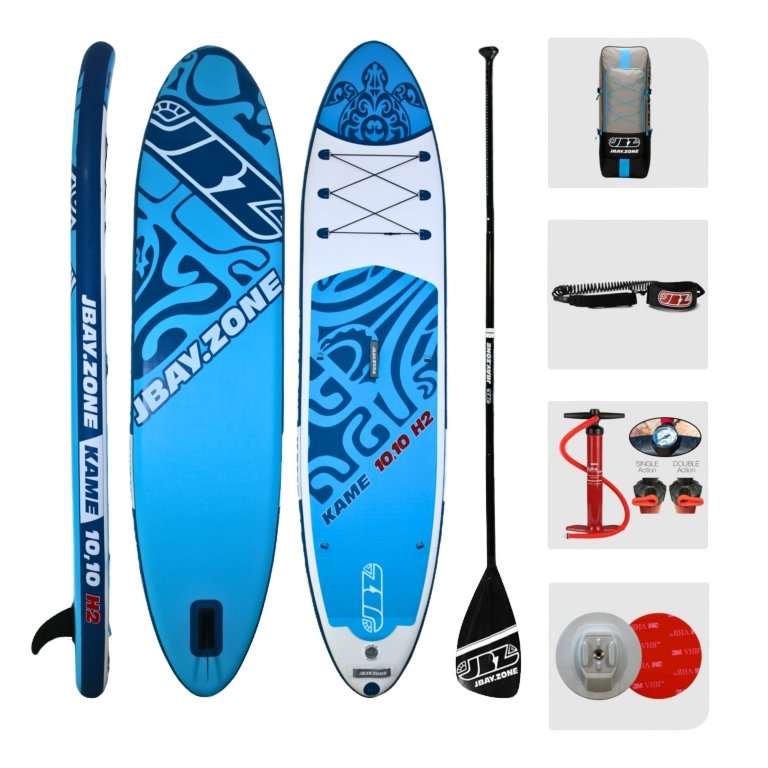
The H2 Kame paddleboard is the perfect choice for anyone who wants to experience the joys of paddleboarding. Thanks to its proportions, the H2 Kame is very stable on both calm and moving water.

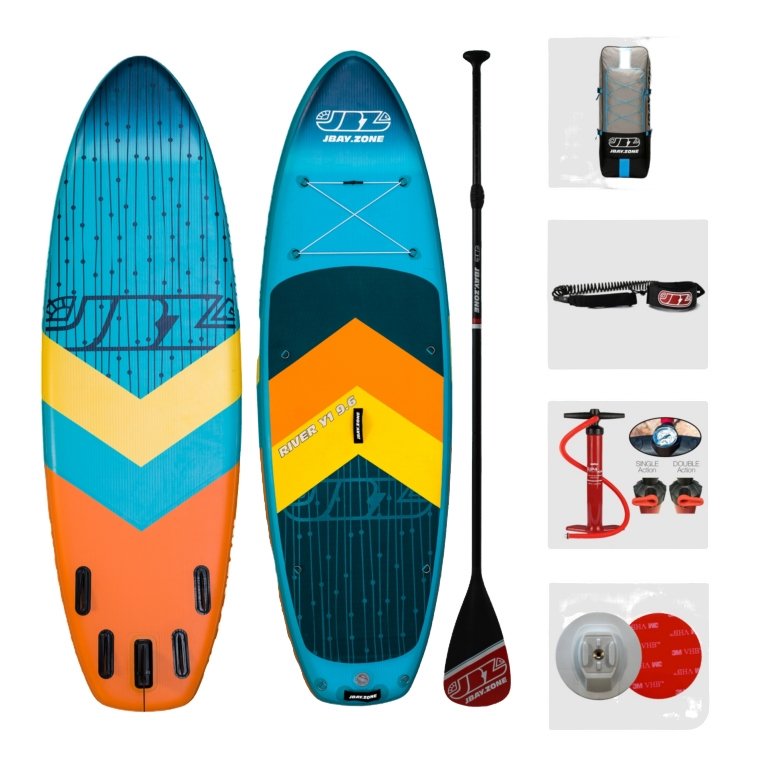
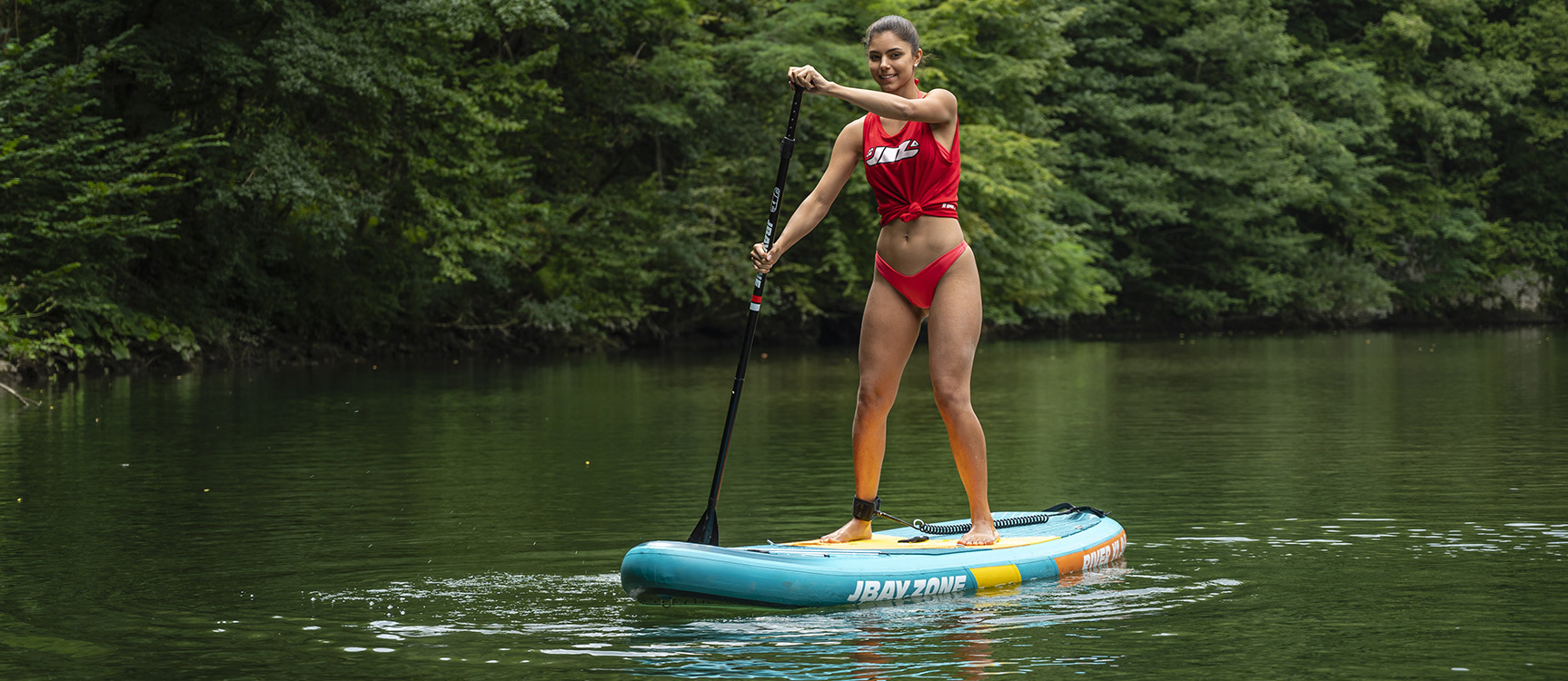
Stand-up paddleboarding on a river offers the chance to explore wild, often inaccessible places. Paddling downstream provides a very rewarding, adrenaline-fueled experience. That’s why JBAY.

The design of the Delta&Beta SUP series, always meticulously crafted by Italian designers, is completely distinct from other offerings and features bold, angular, and distinctive geometries that give the SUPs…

We set out to combine the fun of one of the world's most popular water sports—windsurfing—with the comfort, affordability, and practicality of an inflatable stand-up paddleboard.

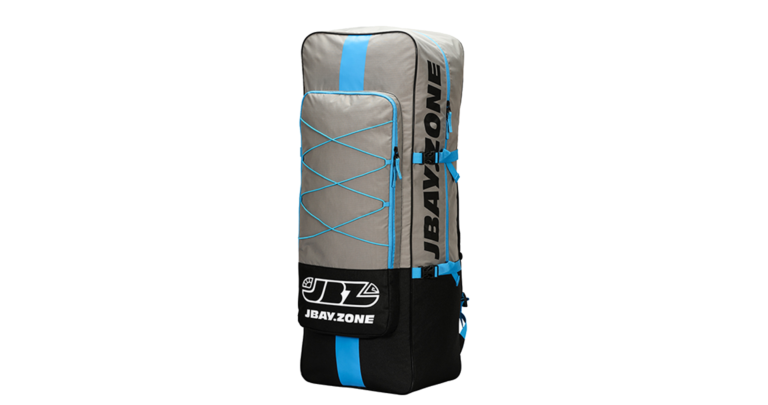
SUP Transport Backpack for the Wave, River, and Rush Series from Jbay.zone. The JBAY.ZONE SUP transport backpack is sturdy, comfortable, and spacious.

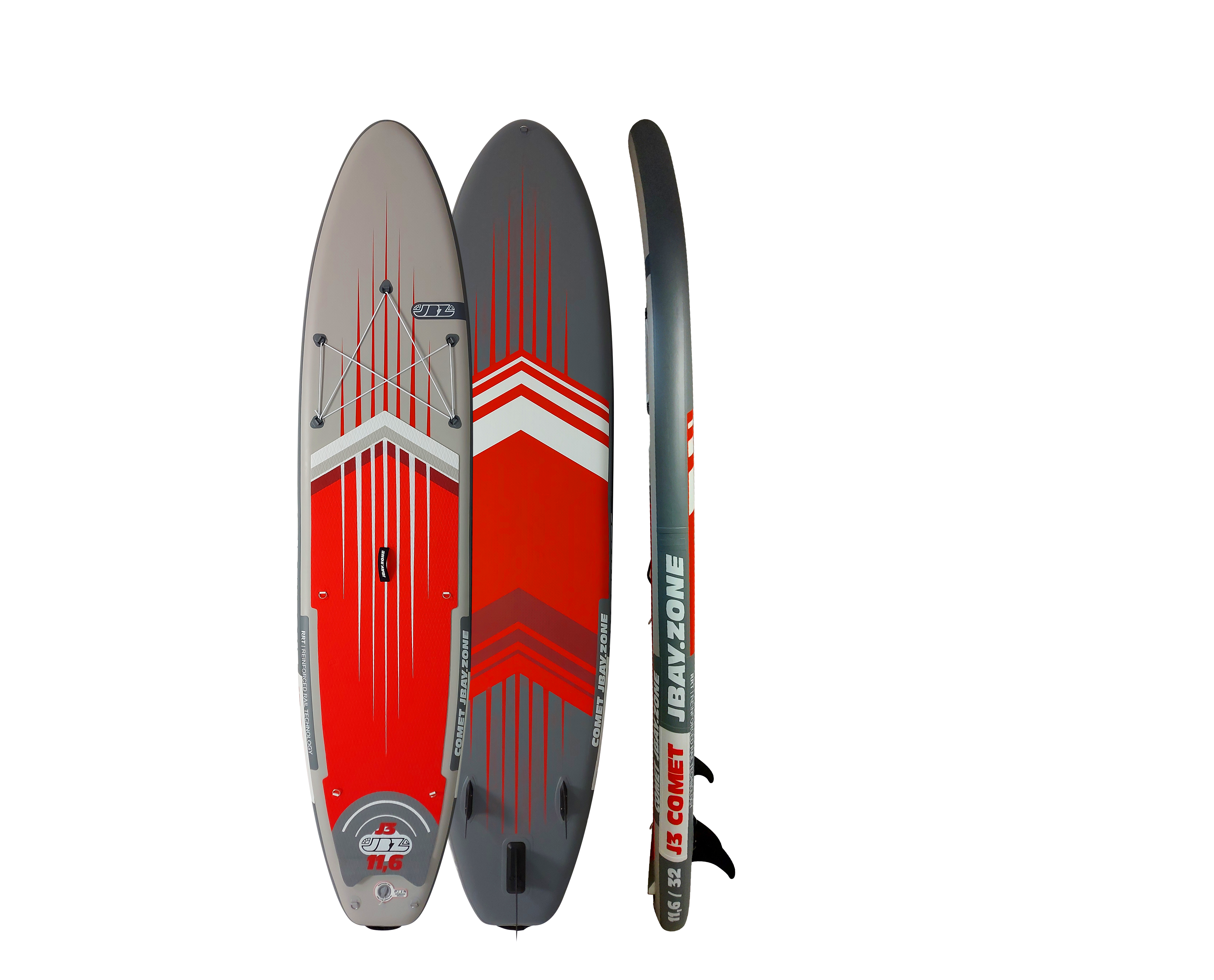
J3 Comet Inflatable Paddleboard: SUP fun is within everyone's reach and requires no special skills or abilities.

Among all-around SUPs, the Comet J2 is definitely the most representative model for JBAY.ZONE. Its 32” (81 cm) width ensures excellent stability and, consequently, plenty of room to move…

A semi-rigid polyester seat adds value to any paddleboard that can be converted into a kayak.

The H3 Kame Amura paddleboard is the ideal choice for any lighter paddler who wants to experience the joys of paddleboarding.
Acra is a purely Czech brand that has been providing a full range of sports equipment for homes and rural playgrounds since 1991.
Customer Service Center
Feel free to write anytime
Call Mon–Fri, 6 a.m.–3 p.m.
Delivery Methods
Payment Methods