Roller skates are one of the fastest ways to enjoy being active—just put them on, hit the road, and in a few minutes you’ll be in a completely different mindset, both physically and mentally. Whether you’re looking for leisurely rides along a bike path, a child’s first few meters “without holding on,” or just reliable gear for the whole season, choosing the right skates makes a huge difference.
In this guide, we’ll show you how to choose skates that fit your needs, along with protective gear that won’t restrict your movement—but will be there to support you when you need it most.
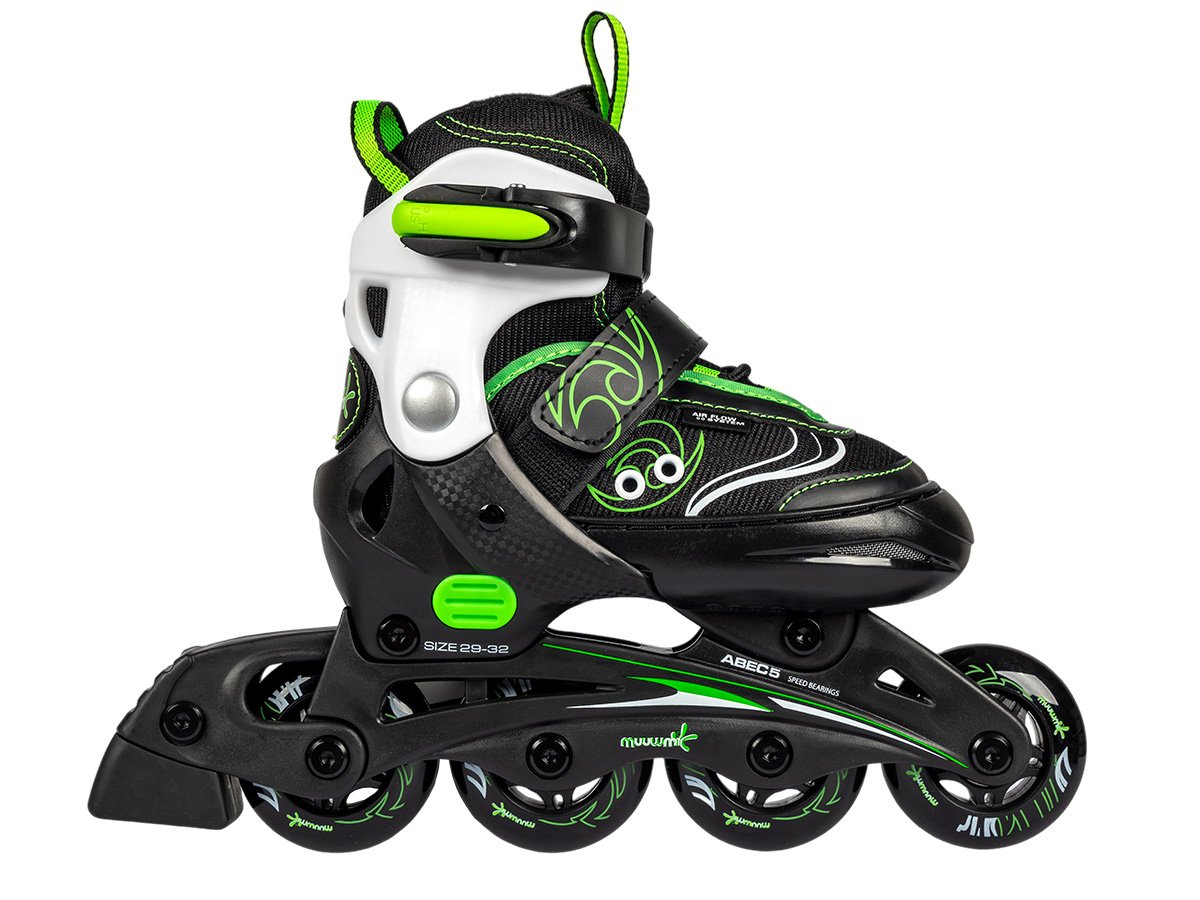
These are a good choice when: your child is just starting out / you want comfort / you don't want to buy new skates every year. What to look
for (and why):
Specific recommendations (links):
These are ideal when: you want “everything at once” without having to worry about compatibility.
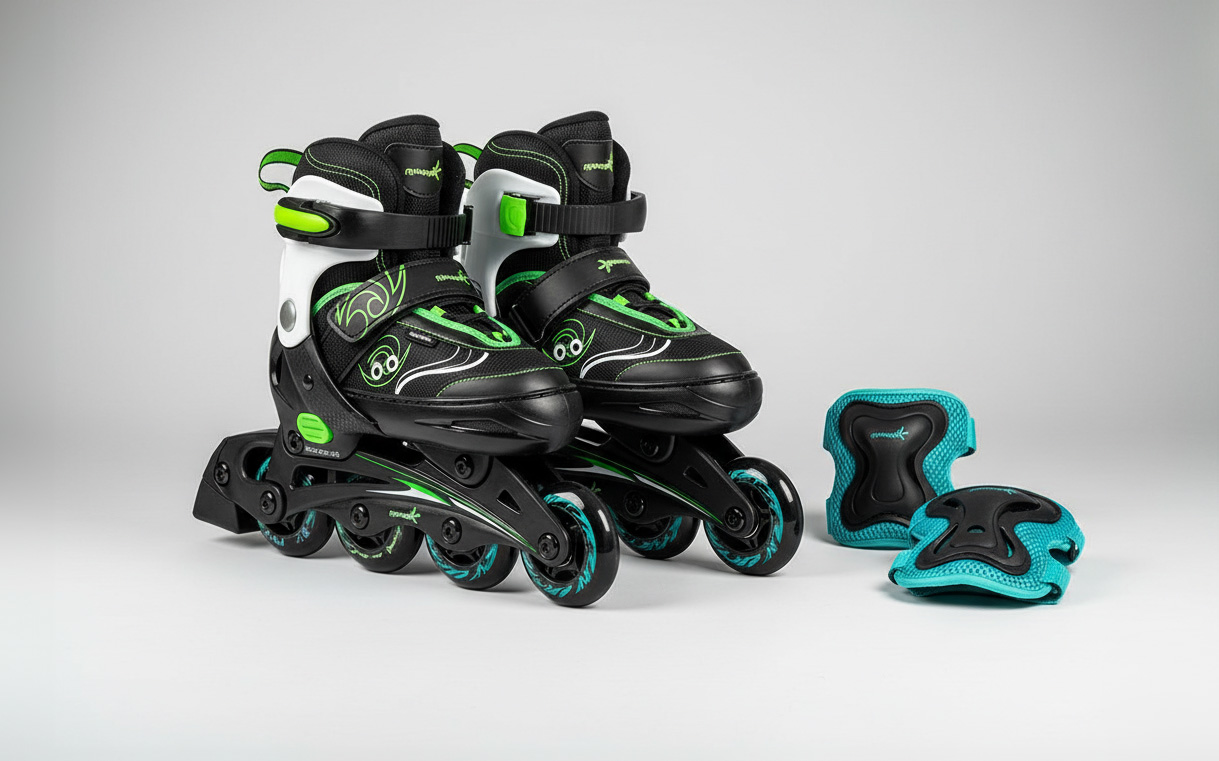
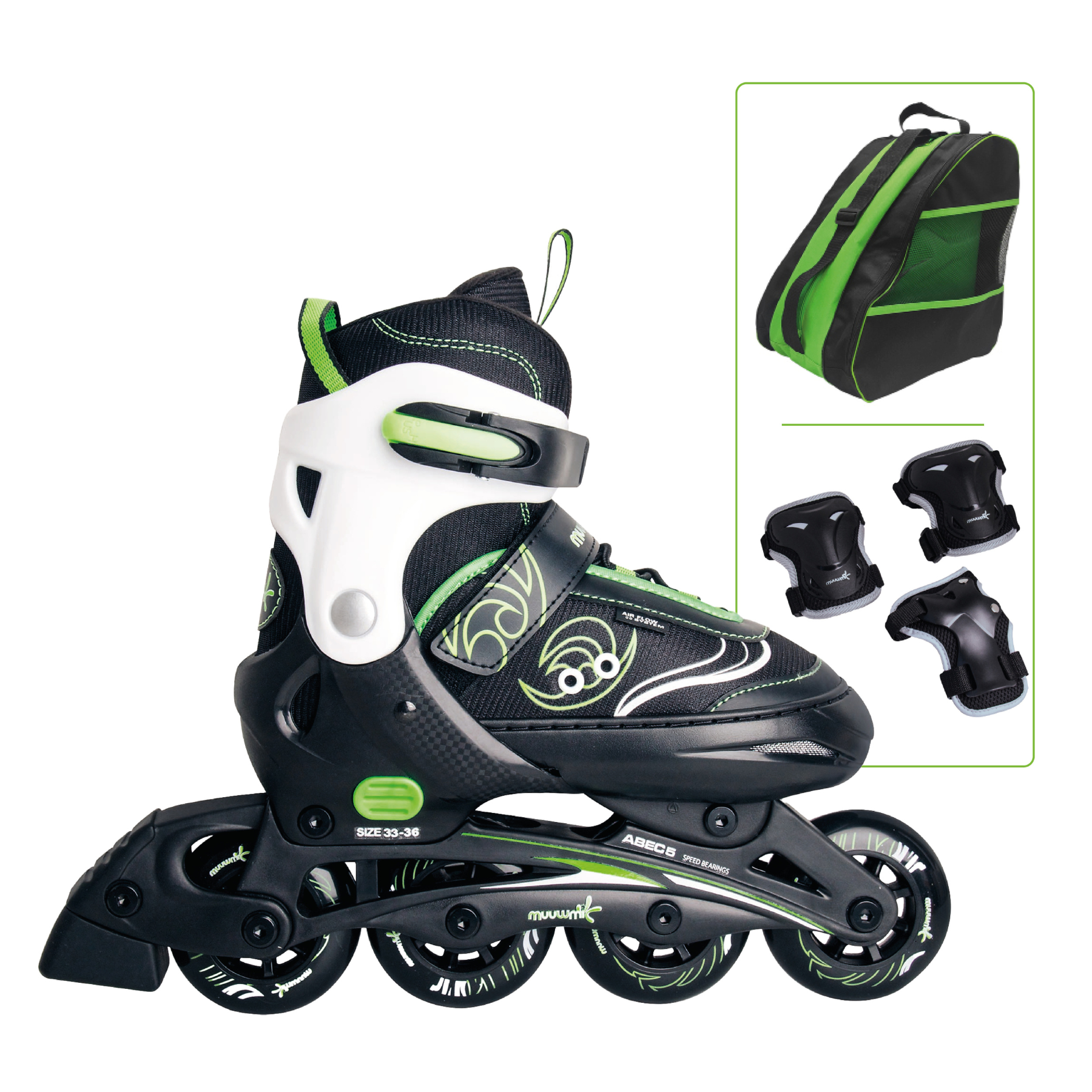
The set includes skates with PU 82A, ABEC 5, and 72×22 mm wheels, plus a set of protective gear (wrists/knees/elbows).
Recommendation:
A handy detail about the protective gear in the set: for each specific model, approximate circumference measurements (wrists/elbows/knees) are provided, which is helpful when making your selection.
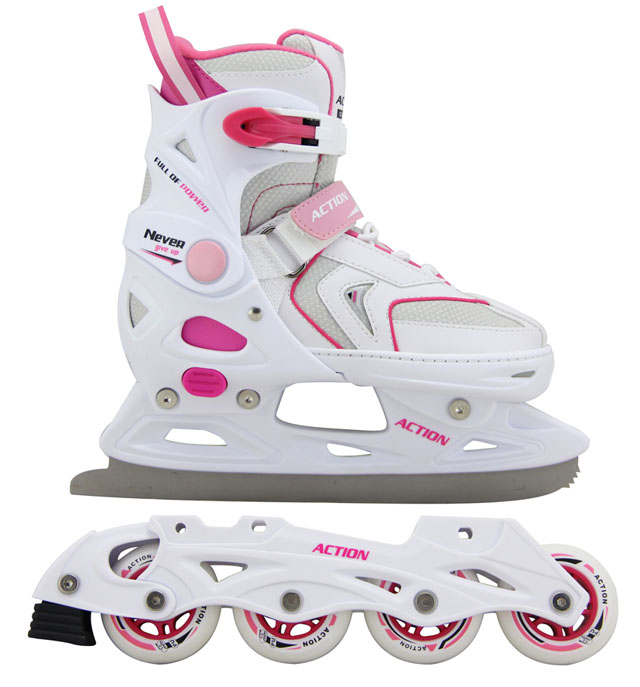
These are a good choice if: you want to use them off-season (inline skating + ice skating).
Key specs to note:
Recommendation:
When inline skating, falls most often affect the wrists, which is why wrist guards are truly essential (ideally worn together with knee and elbow pads).
The simplest option: a 3-in-1 set (wrists + elbows + knees)
Muuwmi sets (6 pieces total):
More robust “racing” pads (often with ABS + breathable fabric)
When your skates aren't performing as well (they slip, vibrate, or don't brake as well), it's often enough to simply replace the worn-out parts.
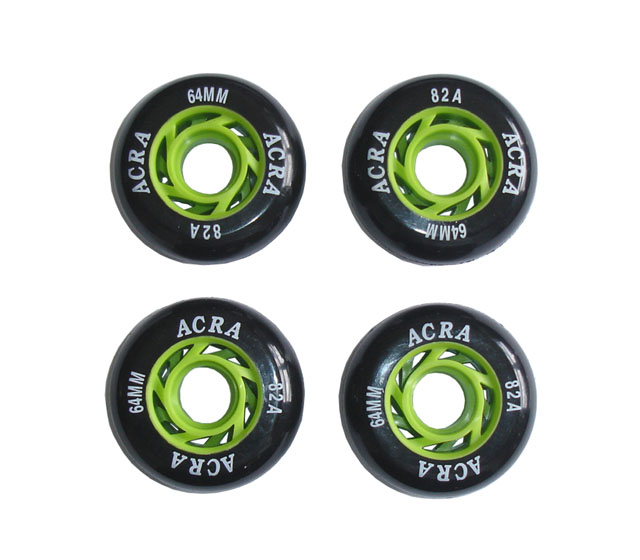
Wheels / Brake:
✔ For your first rides, stick to a smooth, flat surface (bike path, playground) and keep your pace slow.
✔ Make sure the fasteners are securely tightened—your foot shouldn’t be able to lift up at the heel inside the shoe.
✔ Adjust the protective gear so that it doesn’t slip but also doesn’t feel too tight (for children, it’s a good idea to check this even during their first rides).
✔ Occasionally spin the wheels or “rotate” them (this helps ensure more even wear).
✔ Replace the brake as soon as it’s noticeably worn down—this ensures more stable braking.
✔ Dry your skates after skating in wet conditions (the bearings and screws will thank you).
✔ If you want comfort, opt for softer wheels (typically around 82A for recreational models).
✔ A helmet is always a good idea (in the EU, the EN 1078 standard is often cited).
✔ How do I know if my skates are the right size?
Your foot should fit snugly in the boot, without “floating” but without putting pressure on your toes. For children’s models, adjustability is a plus—you can easily fine-tune the fit.
✔ Why is it important to protect your wrists?
When you fall, you instinctively put your hands out—wrist guards significantly reduce the risk of painful injuries.
✔ Are knee pads enough, or should I get a full set?
For inline skates, a full set (wrists + elbows + knees) makes the most sense, since falls tend to involve multiple body parts.
✔ What does ABEC tell me?
It’s a rating for bearing precision (the higher the number, the smoother the ride), but in practice, it also depends on quality and maintenance. For recreational use, ABEC 5 is a standard and functional baseline.
✔ What do the wheel hardness ratings 82A / 84A / 88A mean?
This is the durometer rating (the higher the number, the harder the wheel). Softer wheels provide more cushioning and grip; harder ones tend to be faster and last longer, but they transmit more vibrations and may offer less “grip.”
✔ How often should you replace the wheels?
Once they’re significantly worn down “to the edge,” both stability and ride quality deteriorate. Rotating them regularly also helps. (You can find replacement wheels above.)
✔ When should you address the brake?
When the braking surface is significantly worn down or braking is no longer reliable.
✔ I want skates for winter too—what should I choose?
Look for a 2-in-1 model with an interchangeable chassis (wheels + winter blade).

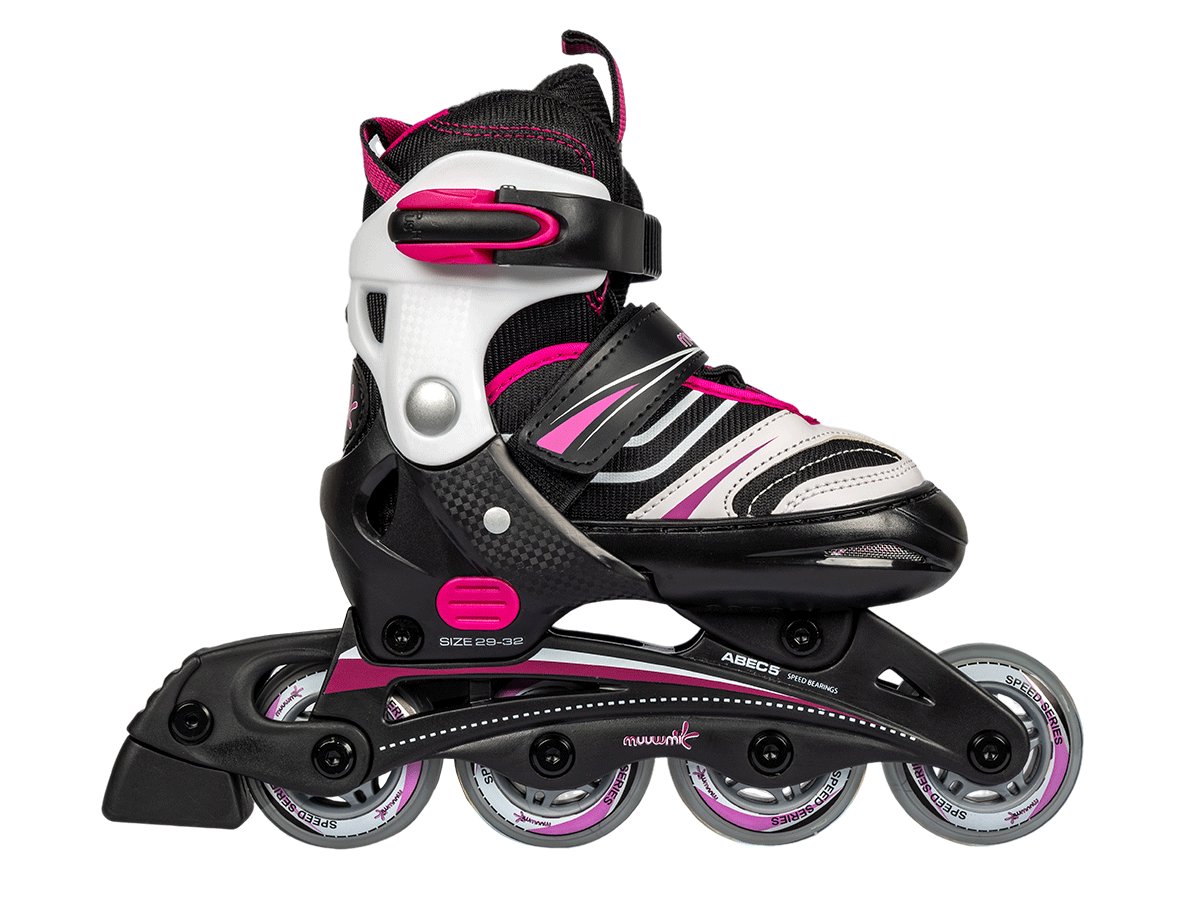
Experience the joy of skating with these pink, adjustable Muuwmi inline skates! Enjoy hours of fun and exercise with these stylish pink Muuwmi inline skates, which are…

Experience endless fun and adventure with your kids on Muuwmi roller skates! Are you looking for the perfect way to spend time actively with your kids while supporting their healthy development?

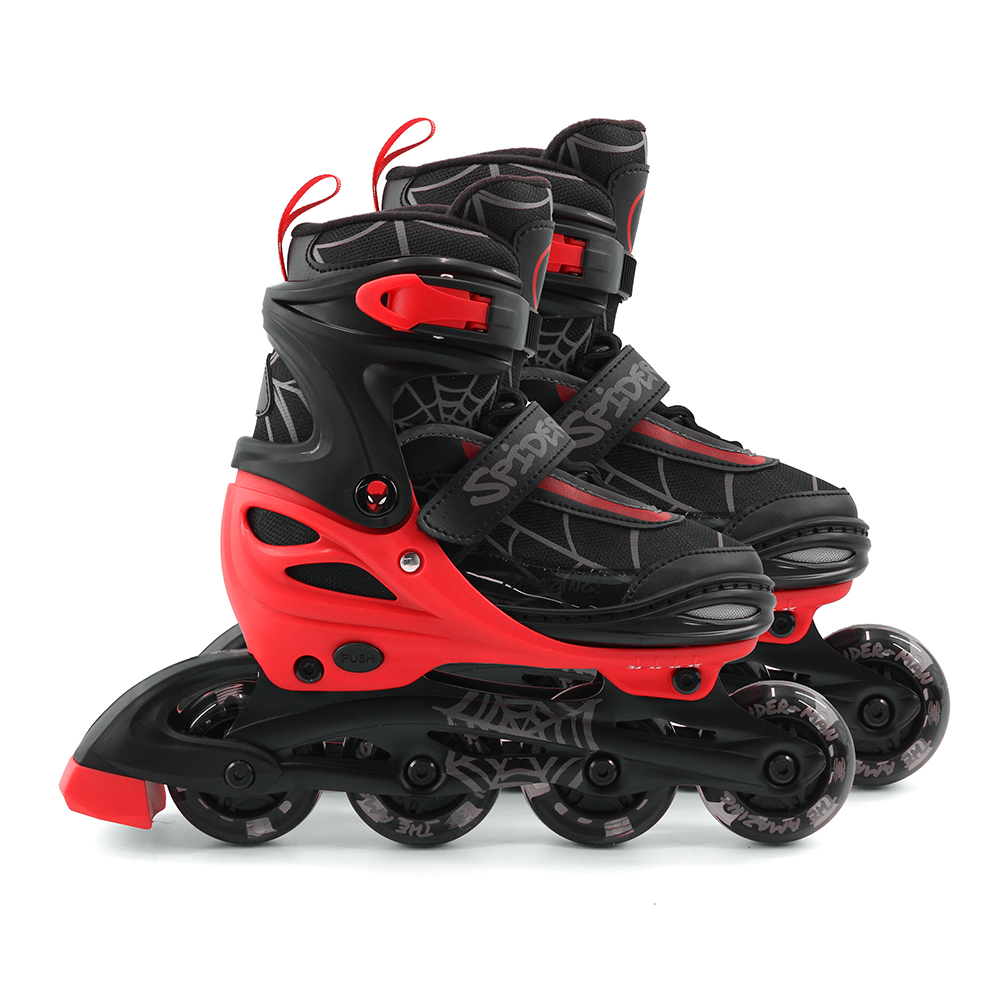
Versatile and fun roller skates for kids who want to learn to skate and gradually improve their skills. These Spider-Man roller skates, in an attractive black-and-red design, will delight all young fans of the popular superhero and encourage them to get active outdoors.

Versatile and fun skates for kids who want to learn to skate and gradually improve their skills. These Spider-Man roller skates, featuring an eye-catching black-and-red design, will delight all young fans of the popular superhero and encourage them to get active outdoors.
Experience endless fun and adventure with your kids on Muuwmi roller skates! Are you looking for the perfect way to spend time actively with your kids while supporting their healthy development?

Women's skates with a 2-in-1 interchangeable chassis are a versatile line of skates designed for year-round use.
Experience endless fun and adventure with your kids on Muuwmi inline skates! Are you looking for the perfect way to spend time actively with your kids while supporting their healthy development?
Replacement wheels for inline skates, 64 x 24 mm in diameter; the wheels are made of soft, layered PU; 4 pieces per blister pack. The price is for 4 pieces.
Experience the joy of skating with these pink, adjustable Muuwmi inline skates! Enjoy hours of fun and exercise with these stylish pink Muuwmi inline skates, which are…

Experience the joy of skating with Muuwmi’s green, adjustable inline skates! Enjoy hours of fun and exercise with these stylish green Muuwmi inline skates, which are…
Acra is a purely Czech brand that has been providing a full range of sports equipment for homes and rural playgrounds since 1991.
Customer Service Center
Feel free to write anytime
Call Mon–Fri, 6 a.m.–3 p.m.
Delivery Methods
Payment Methods